Reference terms from Wikipedia, the free encyclopedia
 

Copper units of pressure

Copper units of pressure or CUP, and the related lead units of pressure or LUP, are terms applied to pressure measurements used in the field of internal ballistics for the estimation of chamber pressures in firearms. These terms were adopted by convention to indicate that the pressure values were measured by copper crusher and lead crusher gauges respectively. In recent years, they have been replaced by the adoption of more modern piezoelectric pressure gauges that more accurately measure chamber pressures and generally give significantly higher pressure values. This nomenclature was adopted to avoid confusion and the potentially dangerous interchange of pressure values and standards made by different types of pressure gauges. For example, it makes little sense to describe a maximum pressure as 300 MPa, and in case the pressure has been measured according to the CUP procedure it should be denoted as 300 MPa (CUP).

Pressure is a fundamental physical parameter that is expressed in units of force divided by area. The unit of pressure in the avoirdupois system is pounds per square inch, while the unit of pressure in the older metric system is the bar, and the unit of pressure in the modern SI system is pascals (equivalent to newtons per square meter). A chamber pressure measured with a copper crusher gauge would there be expressed as psi (CUP) in the English system, bar (CUP) in the metric system, and MPa (CUP) in the SI system.

 
Note:   The above text is excerpted from the Wikipedia article Copper units of pressure, which has been released under the GNU Free Documentation License.
 

Check out these latest Nanowerk News:
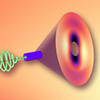
 

Imaging for the first time how molecules rearranged during a chemical reaction controlled by light

For the first time, researchers imaged a molecule undergoing a coherently controlled chemical reaction - a reaction steered with pulses of laser light.

A magnetic field that kills superconductivity can also bring it back

Magnetic fields usually kill superconductivity, but in a thin oxide interface they made it vanish, then return, opening a new way to study quantum effects.

New research reveals what really controls water chemistry in nanoscale spaces

Water in nanoscale spaces is shaped more by pressure and surrounding materials than confinement, offering new ways to improve batteries, fuel cells and nanofluidics.

Scientists discover classical space-time crystals moving like Majorana quasiparticles

New experimental evidence demonstrates that discrete space-time crystals can be realized in classical soft-matter systems, thereby moving beyond the traditional complexities of quantum mechanics.

Tiny water fleas reveal early warning signs of nanomaterial toxicity

Automated system analyzes heart rates of about 150 Daphnia magna per hour, enabling more sensitive detection of toxic effects at low concentrations in aquatic ecosystems.

Self-driving chemistry lab discovers catalysts that can switch products on demand

A self-driving lab rapidly screened catalyst recipes, finding tunable systems that switch chemical products by changing reaction conditions

Electron buildup unlocks precision control of Janus 2D semiconductors

Plasma treatment weakens sulfur bonds, enabling precise room-temperature fabrication of Janus 2D semiconductors for advanced electronics.

Sugar-coated nanoparticles show promise for treating most aggressive form of brain cancer

Sugar-coated lipid nanoparticles carried tumor-suppressing mRNA across the blood-brain barrier, shrinking glioblastoma tumors in mice.

A better way to model the behavior of metal alloys

Researchers' approach captures subtle atomic patterns, improving predictions of material properties.

Next-gen instruments bring nanomaterials into sharper focus

New instruments on the horizon promise the most precise tools yet to study and experiment on the smallest and most complex materials ever manufactured.