

The Ultimate Beginner's Guide to Buying Your First Drone | Comprehensive Drone Buying Guide
Contents
Embarking on the journey of drone piloting can be an exciting and enriching experience. Drones, once exclusive to military and professional use, have now firmly found their place in the consumer market, transforming how we explore, create, and play. Whether you are interested in a drone for beginners and looking to dip your toes into this thrilling hobby, a seasoned hobbyist wishing to push the boundaries of your flying skills or finding the best drone for photography, a creative soul seeking breathtaking aerial shots, or a parent in search of a fun and educational gadget for your kids, there's a drone out there just for you.
Imagine being able to capture your family's outdoor adventures from a stunning new perspective, turning ordinary moments into extraordinary memories. Or think about the thrill of racing through the air at breakneck speed, skimming treetops and dodging obstacles, all from the safety and comfort of the ground. Perhaps you're interested in the serene beauty of nature, and you'd like to document landscapes and wildlife in a way that was previously impossible. Or you might just be seeking a fun, tech-oriented hobby that combines the joy of flight with the challenge of mastering a new skill.
The versatility of drones extends far beyond simple amusement. They can be educational tools, teaching kids about physics, programming, and photography. They are being used for important conservation work, tracking wildlife, and monitoring environmental changes. Even within the realm of hobbies, the options are vast: drone racing, freestyle flying, and drone photography are just a few of the many paths you can explore in this ever-evolving field.
Our comprehensive guide will help you navigate the broad spectrum of drones available on the market, focusing on key factors such as ease of use, durability, safety, battery life, and noise levels. We will also provide an overview of the regulatory landscape, as well as the essential drone accessories needed for various types of drone usage. Our goal is to empower you with the knowledge to make an informed decision when choosing your perfect drone.
Our selection of the best hobby drones for all budgets
| Product | Description | Price | |
|---|---|---|---|
| Best all-rounder drone | |||
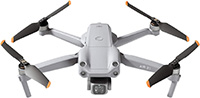 |
DJI Air 2s Drone Quadcopter | The DJI Air 2S is a foldable quadcopter that combines a portable frame with a 1-inch CMOS sensor and advanced imaging features. The camera records at up to 5.4K at 30 frames per second and 4K at 60 frames per second, with support for a 10-bit Dlog-M color profile capable of capturing up to one billion colors. Mounted on a 3-axis gimbal, the camera delivers stable footage even in windy conditions, making it well suited for both professional and hobbyist video work. The Air 2S includes several intelligent flight modes that simplify capturing cinematic footage. MasterShots automatically generates a sequence of professional camera moves with a single tap, while FocusTrack offers subject tracking through Spotlight 2.0, ActiveTrack 4.0, and Point of Interest 3.0. Together, these features allow the drone to follow, lock onto, or orbit around a subject without requiring complex manual input. Safety and situational awareness are supported by obstacle sensing in four directions—forward, backward, upward, and downward. This system helps reduce the risk of collisions when flying in tight or complex environments. Connectivity is powered by DJI's O3 (OcuSync 3.0) transmission technology, which provides a maximum video transmission distance of up to 7.5 miles. The feed remains smooth and reliable, which is important for long-distance flying and monitoring in real time. Flight performance balances endurance with portability. The drone achieves up to 31 minutes of flight time under ideal conditions, and its compact foldable design makes it easy to transport in a backpack. Overall, the DJI Air 2S offers a strong combination of image quality, intelligent automation, and reliable safety systems. It is best suited for creators and enthusiasts who want a lightweight but capable drone that bridges the gap between entry-level consumer models and heavier professional rigs. |
~$899 |
| Best drones with camera for aerial photos and videos | |||
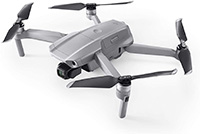 |
DJI Mavic Air 2 Fly More Combo | The DJI Mavic Air 2 is a compact foldable drone that balances portability with advanced camera features. Equipped with a 1/2-inch CMOS sensor, it captures 48-megapixel stills and records 4K video at up to 60 frames per second. The sensor uses Quad Bayer technology to enhance dynamic range, producing HDR video with greater detail in highlights and shadows. Stabilization is handled by a 3-axis gimbal, ensuring smooth footage even during fast maneuvers. For creative shooting, the drone supports 8K Hyperlapse, which allows users to produce stabilized time-lapse sequences directly from the aircraft. Intelligent tracking features include Spotlight 2.0, ActiveTrack 3.0, and Point of Interest 3.0, which keep subjects framed while the drone moves around them or follows automatically. These modes simplify complex camera movements, making cinematic results accessible to less experienced pilots. OcuSync 2.0 transmission provides a stable video link with a maximum range of 6.2 miles (10 kilometers). It also supports 1080p Full HD live streaming directly from the camera to the controller display, giving pilots a clear real-time view while flying. Flight endurance is one of the Mavic Air 2's strengths, with a maximum flight time of up to 34 minutes under ideal conditions. Obstacle sensing in three directions—forward, backward, and downward—adds a measure of safety, particularly useful for beginners or when flying in tight spaces. The Fly More Combo includes three batteries, a charging hub, additional propellers, ND filters, a protective carrying bag, and other accessories, extending flight sessions and increasing versatility. Overall, the DJI Mavic Air 2 offers a strong mix of imaging performance, intelligent features, and flight time. It is best suited for photographers and videographers who want high-resolution results in a portable form, with added value from the Fly More Combo's expanded accessories. |
~$1099 |
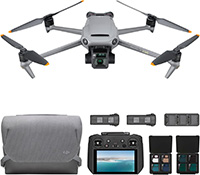 |
DJI Mavic 3 Cine Premium Combo, Drone with 4/3 CMOS Hasselblad Camera | The DJI Mavic 3 Cine is a flagship drone built for professional filmmakers and aerial photographers. At its core is a 4/3 CMOS Hasselblad camera that captures 20-megapixel stills and video at up to 5.1K resolution. The larger sensor delivers a 12.8-stop dynamic range, preserving detail in both highlights and shadows, while the Hasselblad color science ensures accurate and natural tones. Mounted on a 3-axis gimbal, the camera maintains stability during high-speed maneuvers and challenging conditions. The Cine edition is distinguished by its support for Apple ProRes 422 HQ, 422, and 422 LT codecs, in addition to standard H.264 and H.265 encoding. This allows professionals to capture footage with more visual information and flexibility in post-production. The drone also includes a built-in 1 TB SSD and is paired with the DJI RC Pro controller, offering a high-brightness screen and low-latency video feed. Flight endurance is another highlight, with a maximum flight time of up to 46 minutes and a maximum range of 30 kilometers under ideal conditions. O3+ transmission provides a 15-kilometer maximum video link with smooth, stable live feeds in 1080p. The aircraft is rated for operation in wind speeds up to 12 m/s and in temperatures from –10°C to 40°C. Safety is enhanced by omnidirectional obstacle sensing, which uses multiple vision sensors to detect hazards in every direction. The drone also features an advanced Return-to-Home system that calculates the safest and most efficient route back to the launch point when activated. Additional intelligent modes include MasterShots, Hyperlapse, ActiveTrack, and Waypoint Flight, which allow automated shooting and repeatable flight paths. Overall, the DJI Mavic 3 Cine Premium Combo is a top-tier aerial platform that combines a professional-grade Hasselblad camera, extended flight time, robust safety features, and advanced codecs. It is best suited for filmmakers and production teams seeking cinematic results in a portable drone system. |
~$3349 |
| Best entry-level, low-budget drone for learners | |||
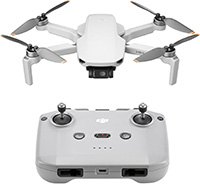 |
DJI Mini 4K | The DJI Mini 4K is an entry-level drone designed to offer strong imaging performance in a highly portable frame. Weighing under 249 grams, it avoids FAA registration requirements for recreational use in the United States, making it especially appealing to new pilots who want a straightforward introduction to aerial photography. The camera records in 4K Ultra HD and is mounted on a 3-axis gimbal, ensuring stable footage even during sharp maneuvers or windy conditions. This setup enables cinematic-quality results for casual creators and hobbyists, capturing details in both daytime and low-light scenes. Intelligent shooting modes such as QuickShots—including Helix, Dronie, Rocket, Circle, and Boomerang—automate complex flight paths, giving beginners access to professional-looking video with minimal effort. In terms of flight performance, the Mini 4K delivers up to 31 minutes of flight time on a single battery, with options to purchase sets that include two or three batteries for extended sessions. The drone maintains stability in winds up to 38 kph (Level 5) and can operate at altitudes up to 4,000 meters, thanks to its efficient brushless motors. Safety and accessibility are emphasized with beginner-friendly features. One-tap takeoff and landing, GPS-based Return to Home, and stable hovering reduce the learning curve for new users. The DJI Fly app also includes tutorials and resources to help pilots quickly gain confidence in flight. Connectivity is supported by a video transmission range of up to 10 kilometers, providing a clear and reliable feed to the controller. While the app has been removed from Google Play due to compatibility issues, it remains available for download directly from DJI. Overall, the DJI Mini 4K combines portability, ease of use, and 4K imaging in a lightweight package. It is well suited for first-time drone owners and hobbyists seeking a balance between affordability and performance. |
~$249 |
| Best entry-level, mid-budget drones | |||
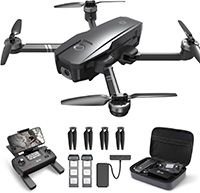 |
Holy Stone HS720 Foldable GPS Drone | The Holy Stone HS720 is a foldable GPS drone designed for adult beginners and hobbyists who want long flight times and accessible controls at a mid-budget price. It features a 4K UHD camera mounted on a shock absorption holder, reducing vibration to capture smoother video at 3840 × 2160 resolution. A 90° adjustable lens and 5GHz FPV transmission allow pilots to view real-time footage from multiple perspectives while maintaining a stable connection. Flight endurance is a key strength of the HS720. The package includes two intelligent batteries, each providing up to 26 minutes of flight, for a combined total of around 52 minutes. Brushless motors improve efficiency and extend motor life while offering quieter operation than brushed alternatives. The drone folds for transport and comes with a carrying case for added portability. GPS-assisted features improve both safety and ease of use. The drone can automatically return home when the battery is low, the signal is lost, or the return key is pressed. Additional intelligent modes include Follow Me, custom flight paths, and Point of Interest orbiting, which make it easier to focus on recording rather than manual control. Operation is designed to be beginner-friendly. Multiple sensors help stabilize hovering even in areas with weak GPS signals, assisted by optical flow positioning. One-key start/stop, altitude hold, and an emergency stop option make the HS720 accessible to new pilots, while an electronic fence function helps keep flights within a safe boundary. The controller offers a 3,000-foot range with real-time battery and GPS status displayed on its LED screen. It also includes a dedicated light switch and a left-handed throttle option for added customization. Overall, the Holy Stone HS720 provides long flight time, GPS-enabled safety features, and stable 4K video capture in a foldable design, making it a practical choice for beginners seeking a balance of affordability and performance. |
~$219 |
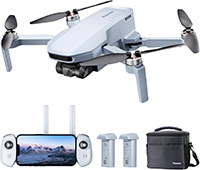 |
Potensic ATOM SE GPS with 4K EIS Camera | The Potensic ATOM SE is a lightweight foldable drone designed to give beginners and casual flyers access to 4K video and extended flight time at an affordable price. Weighing under 249 grams, it does not require FAA registration for recreational use in the United States, making it an approachable choice for first-time pilots. Despite its small size, it is equipped with brushless motors and is rated to withstand Level 5 winds, maintaining stability in breezy conditions. The camera uses a 1/3-inch Sony CMOS sensor, capable of capturing 12-megapixel photos and recording 4K video at 30 frames per second. An electronic image stabilization system, combined with Potensic's ShakeVanish technology, reduces vibration for clearer images within a 118° field of view. The lens can tilt vertically from +20° to –90°, giving pilots flexibility in framing shots. Flight performance is supported by the SurgeFly control system, which offers a beginner mode along with three additional flight modes—Video, Normal, and Sport. In Sport mode, the drone can reach a maximum speed of 16 meters per second, accelerating quickly for more dynamic flying. Two 2500 mAh batteries are included, each providing up to 31 minutes of flight, for a total of approximately 62 minutes of air time. PixSync 2.0 transmission technology extends the control range to about 4 kilometers, providing low-latency HD video feeds in most conditions. GPS-assisted functions include automatic Return to Home when the battery is low or the signal is lost, along with intelligent modes such as Follow Me, Waypoint Flight, and Circle Flight. These features give users added safety and creative options for aerial footage. Overall, the Potensic ATOM SE combines portability, long flight time, and 4K recording in a lightweight package that is beginner-friendly while offering enough flexibility for more experienced pilots. |
~$249 |
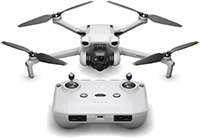 |
DJI Mini 3 | The DJI Mini 3 is a compact, foldable drone designed for beginners and hobbyists who want high-quality 4K video in a lightweight frame. At under 249 grams, it does not require FAA registration or Remote ID for recreational use in the United States, making it accessible for first-time pilots. Despite its small size, it includes advanced imaging features and long battery life that set it apart in the entry-level category. The camera captures 4K HDR video with support from Dual Native ISO Fusion, which enhances detail in both bright highlights and darker areas. A 3-axis mechanical gimbal ensures stable footage, even in challenging conditions, while Level 5 wind resistance allows for reliable operation in winds up to 38 kph. The drone's lens also supports True Vertical Shooting, enabling tall subjects such as skyscrapers or waterfalls to be framed correctly for social media platforms without additional editing. Flight performance is another strength. The Mini 3 offers up to 38 minutes of flight on the standard battery, with the option to extend flight time to 51 minutes using the Intelligent Flight Battery Plus (sold separately). In Fly More Combo configurations, total flight time can reach up to 114 minutes across multiple batteries. Brushless motors provide power efficiency and allow takeoff at altitudes up to 4,000 meters. Video transmission uses DJI's robust system, delivering HD video feeds up to 10 kilometers away with strong anti-interference capability. This ensures smooth real-time monitoring, even when exploring wide or complex landscapes. Creative shooting options include QuickShots—automated flight paths for cinematic results—and Panorama modes for wide-scene capture. These features simplify advanced aerial photography, allowing beginners to create polished footage with minimal manual control. Overall, the DJI Mini 3 combines portability, strong 4K video performance, and long flight times in a package designed to be approachable for new pilots while offering creative flexibility for more experienced users. |
~$379 |
| Best first-person view drone for beginners | |||
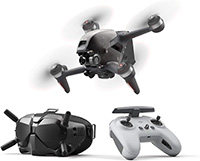 |
DJI FPV Combo - Quadcopter plus Goggles | The DJI FPV Combo introduces first-person view flying to a wider audience, combining immersive visuals with high-performance flight capabilities. Central to the experience are the DJI FPV Goggles V2, which deliver a super-wide 150° field of view and low-latency HD video transmission. This allows pilots to see the flight in real time with minimal delay, creating the sensation of being in the cockpit. The aircraft records video at up to 4K resolution and 60 frames per second, with a maximum bitrate of 120 Mbps. This produces sharp, detailed footage that captures the intensity of fast aerial maneuvers. The wide field of view adds to the sense of speed and immersion, making the FPV Combo well suited for both recreational flying and dynamic video production. Flight control includes a new "S Mode," designed as a hybrid between manual and assisted flight. It gives pilots the cinematic freedom associated with FPV drones while retaining some of the safety and ease of standard DJI flight modes. This makes it possible for new FPV users to ease into the unique handling of this style of drone. Safety features include forward and downward obstacle sensors, Smart Return to Home, and Low Battery Return to Home. An auxiliary bottom light improves visibility when landing in low-light environments. Together, these systems provide added reassurance when flying at the high speeds typical of FPV drones. The DJI FPV Combo is FAA Remote ID compliant, ensuring it meets current U.S. regulations for recreational and professional use. Overall, the DJI FPV Combo offers an accessible entry into FPV flight without sacrificing safety or image quality. It combines immersive goggles, 4K video, and intelligent safety systems, making it an appealing choice for pilots who want both adrenaline and control in their aerial experience. |
~$749 |
| Best indoor drones | |||
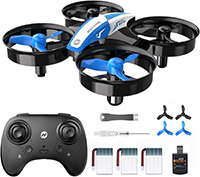 |
Holy Stone Mini Drone | The Holy Stone HS210 is a compact indoor quadcopter designed for children, beginners, and casual flyers who want an easy introduction to drone piloting. Its small size and lightweight build make it suitable for indoor spaces, while built-in safety features ensure it is safe for young users. The drone includes several playful flight functions that make it more engaging than basic toy models. It can perform toss-to-launch takeoffs, 3D flips, circular flight patterns, and auto rotation, giving kids a variety of ways to explore flying. Speed settings can be adjusted to match the pilot's skill level, providing a gradual learning curve for new users. User-friendly controls support beginner pilots. Altitude Hold enables the drone to hover at a fixed height without constant manual adjustment, while Headless Mode simplifies navigation by aligning directional input with the pilot's perspective. These features reduce the difficulty of controlling the drone, allowing children and first-time flyers to focus on enjoying the experience. The HS210 is powered by three interchangeable batteries, each providing up to 7 minutes of flight for a total of around 21 minutes. A low-battery alarm alerts users when power is running low, helping to prevent unexpected landings or loss of control. Safety and durability are emphasized in the design. Propeller guards fully enclose the rotors, protecting both the drone and nearby users from damage or injury. The lightweight construction also minimizes the risk of harm if the drone collides with walls or furniture. Portability is another advantage. The HS210 is small enough to carry to parties, school events, or family outings, making it an accessible entertainment option. Overall, the Holy Stone HS210 provides a fun, affordable, and safe entry point into drone flying, combining simple controls, safety features, and playful functions tailored to kids and beginners. |
~$39 |
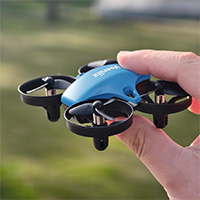 |
Veeniix V995 Mini Drone for Kids 8-12 | The Veeniix V995 is a compact indoor quadcopter aimed at children and beginners who want an easy-to-fly drone with playful stunt capabilities. Its small size makes it suitable for indoor use, while protective guards and built-in safety features make it a safe option for younger pilots. Flight functions are designed to entertain and engage. The V995 can perform 3D flips, 360° rotations, and circular flight patterns at the push of a button, giving kids the chance to practice aerial stunts without complicated controls. Speed settings can be adjusted across three levels—low, medium, and high—so new pilots can learn gradually before attempting faster maneuvers. Ease of control is supported by features such as one-key takeoff and landing, altitude hold for stable hovering, and headless mode, which simplifies navigation by aligning controls with the pilot's perspective. These functions reduce the learning curve and help new flyers focus on enjoying the experience. The drone is powered by three rechargeable batteries, each offering around 7 minutes of flight time. With all three included, total air time can reach approximately 21 minutes before recharging is needed. Low battery and distance warnings are built in to alert pilots when the drone needs to be brought back, helping avoid sudden losses of power. Durability is emphasized through a lightweight frame and propeller guards that protect both the drone and its users. The compact design also makes it easy to carry to parties, school events, or family outings, adding portability to its list of strengths. Overall, the Veeniix V995 provides a safe, beginner-friendly entry into drone flying, with straightforward controls, bundled batteries, and entertaining stunt modes. It is well suited for children aged 8–12 and novice flyers looking for an affordable, fun indoor drone. |
~$39 |
| Product | Description | Price | |
|---|---|---|---|
| Best toy and novelty drones | |||
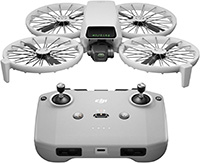 |
DJI Flip | The DJI Flip is a lightweight drone designed to bring advanced imaging and intelligent flight features to an entry-level form factor. Weighing under 249 grams, it avoids FAA registration and Remote ID requirements for recreational use in the United States, making it regulation-friendly and easy to travel with. Its compact frame is enhanced with full-coverage carbon fiber propeller guards, offering safety for pilots and protection for the aircraft during indoor or close-quarters flying. At the core of its imaging system is a 1/1.3-inch CMOS sensor, larger than many drones in its weight class. This sensor captures more light, producing sharper details and more vivid colors in both landscapes and portraits. Video recording is supported at 4K resolution with 60 frames per second in HDR, giving footage smooth motion and strong dynamic range. A 3-axis gimbal stabilizes the camera, ensuring that shots remain steady even during quick maneuvers or in moderate winds. Flight time is rated at up to 31 minutes per battery, allowing users to explore and record without constant recharging. The Flip also supports subject tracking, keeping people or objects centered in frame for cinematic results during activities such as hiking, events, or sports. Connectivity is powered by DJI's transmission system, providing a clear HD video link at distances of up to 13 kilometers (about 44,000 feet). This extended range ensures reliable control and real-time monitoring during longer flights. The package includes the drone, the DJI RC-N3 controller, one Intelligent Flight Battery, and essential accessories, offering everything needed to start flying. Pilots will need to download the DJI Fly app directly from DJI's website due to compatibility changes with Google Play. Overall, the DJI Flip combines portability, safety, and strong imaging performance, making it a capable choice for beginners seeking advanced features in a regulation-friendly drone. |
~$439 |
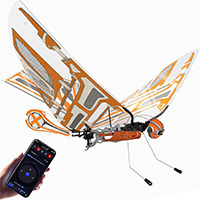 |
X-Fly Bionic Bird | The X-Fly Bionic Bird is an ornithopter-style drone that mimics the flight of real birds through flapping wings rather than propellers. At just 12.2 grams with a 380 mm wingspan, it is exceptionally lightweight, making it capable of both indoor and outdoor flight. Its design includes elastic wings, tail, legs, and head to absorb impacts, while a reinforced micromotor and patented wing mechanism ensure efficient flapping performance. Flight stability is supported by a 6-axis gyroscope and algorithms developed in collaboration with defense technology, enabling assisted straight-line and anti-fall flight. This technology, previously limited to multirotor UAVs, allows the Bionic Bird to maintain heading and avoid rapid altitude loss during turns. Directional control is achieved by deforming the wings, enabling precise maneuvers and aerial stunts. The drone can also glide efficiently thanks to its low weight-to-wing-area ratio, taking off and landing from the ground using its legs. The bird operates at speeds from 5 to 20 km/h depending on tail configuration, with altitude managed by adjusting wing flapping frequency. Continuous flight lasts up to 12 minutes per battery, with recharging completed in 12 minutes on the dedicated charger. An exclusive battery swap system allows quick replacement for extended sessions. Control is handled primarily through the Android-compatible smartphone app via Bluetooth 5.2, with a range of up to 150 meters. The app offers multiple control modes—intuitive, classic, and optional XPlay controller mode—and supports multiplayer flying. Firmware updates are available through the app, and optional LED modules and buzzer add customization. Overall, the X-Fly Bionic Bird blends biomimetic engineering with modern sensor-assisted control, offering a unique alternative to traditional propeller drones. Its lightweight build, flapping-wing propulsion, and assisted stabilization make it suitable for beginners while providing an innovative flying experience for more advanced pilots. |
~$119 |
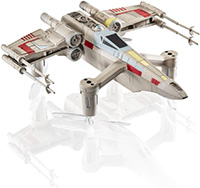 |
Propel Star Wars T-65 X-Wing Quadcopter: X Wing Collectors Edition Box | The Propel Star Wars X-Wing quadcopter is a collector-focused flying model that combines themed design with functional quadcopter flight. Modeled after the T-65 X-Wing from the Star Wars films, each unit is hand-painted to hobby quality, individually numbered, and packaged in a collector's edition box. The design emphasizes display value as much as flight capability, making it appealing to both fans and casual pilots. In terms of performance, the quadcopter is capable of reaching speeds up to 35 mph. It includes three selectable speed settings, allowing beginners to learn basic control before moving up to higher responsiveness suited for more experienced users. Altitude stabilization assists pilots by holding the craft steady in flight, easing the learning curve for casual operation. The quadcopter features a reverse propulsion design, which helps create a distinctive flight profile compared with conventional drones. While flight times are limited to about 6–8 minutes per battery charge, the system is designed for short bursts of entertainment rather than extended aerial sessions. Average recharge time is around 30–40 minutes. The 2.4 GHz wireless controller requires four AA batteries (not included). The system also supports multiplayer engagement, with the ability to "battle" up to 12 Star Wars quadcopters simultaneously. This feature adds an interactive element for group play and aligns with the franchise theme of dogfighting in space battles. Overall, the Propel Star Wars X-Wing quadcopter functions as both a display-worthy collector's item and a novelty flying drone. Its hand-painted detailing, numbered edition, and themed flight mechanics set it apart from standard quadcopters. While limited in endurance, it offers a unique combination of collectible value and fun, making it best suited for Star Wars enthusiasts and casual hobbyists. |
~$299 |
Understanding Drones: The Basics
Before diving into the world of specific drone types, it's important to grasp some fundamental concepts that should guide your purchase. These include ease of use, durability, safety, regulations, battery life, and noise level.
Ease of Use: The operational complexity of drones can range from simple, beginner-friendly models to more sophisticated drones requiring advanced piloting skills. For novices, drones with features like auto-takeoff and landing, obstacle avoidance, and pre-programmed flight modes can be excellent choices. These attributes help new pilots gain confidence and enhance their flying proficiency without overwhelming them.
Durability: Especially for beginners and kids who are still learning the ropes, the drone must be sturdy enough to withstand the occasional mishap. Drones like the Holy Stone HS720 are designed with high-quality materials and feature protective elements like propeller guards. Durability is critical as it often determines the drone's longevity and ultimately its value for money. When a drone can survive minor bumps and crashes, you can focus more on improving your piloting skills rather than worrying about damaging your device.
Safety: Operating drones safely should always be a top priority. Therefore, drones with built-in safety features are a solid investment. Look for models that include return-to-home (RTH) functions, which ensure the drone will automatically return to its launch point if it loses connection or the battery runs low. Collision avoidance systems, like those found in the DJI Air 2S, help prevent accidental crashes, while geofencing features restrict the drone from entering potentially unsafe or legally restricted areas. For kids' drones, safety features might also include speed control and emergency stop functions.
Regulations and Permits: The rules around drone operation can vary greatly based on location and the drone's specifications. In some areas, drones over a certain weight, like 0.55 pounds in the U.S., need to be registered with the local aviation authority. Certain permits might be necessary for drones capable of flying beyond the visual line of sight (BVLOS) or those used for commercial purposes. Always check local regulations before purchasing and operating a drone to ensure you're flying legally and safely.
Battery and Flight Times: Battery life is a crucial factor as it determines the duration of your drone flight per charge. Typically, drones can offer up to 40 minutes of flight time. However, factors such as wind, flight speed, and camera usage can affect battery performance. Extra batteries can help extend your flight session, but it's important to have realistic expectations about flight time when choosing your drone.
Noise Level: Not all drones are created equal when it comes to the noise they produce. In general, smaller drones tend to be quieter, while larger, more powerful drones create more noise due to their larger propellers and more powerful motors. Models like the DJI Mini 3 are popular for their quieter operation. Noise can be a crucial factor if you live in a densely populated area, wish to fly in public spaces, or aim to use your drone for wildlife photography where silence is golden.
Understanding these essential aspects will help ensure that your drone purchase meets your needs and expectations, setting you on a successful journey into the world of drone piloting. With these basic considerations in mind, let's explore different drone categories.
Exploring Drone Categories
Drones come in all shapes and sizes, each designed with specific uses in mind. From hobby drones to advanced models, here's a deeper look into each category, complete with examples, features, and what to expect as a new drone pilot:
Hobby Drones
These drones are an excellent way for beginners to immerse themselves in the drone hobby without requiring a significant investment. With intuitive controls and decent flight times of around 30 minutes, hobby drones offer an ideal entry point for those wanting to fly without additional bureaucratic steps. Many hobby drones fall just below the FAA registration weight threshold in the U.S., making them accessible choices. Models like the DJI Mini 4K even sport high-quality cameras, making them versatile choices for those eager to dabble in drone photography.
Racing Drones
Built for speed and agility, racing drones offer a more thrilling, adrenaline-filled experience. They require more piloting skill to operate but reward pilots with high-speed races and acrobatics. Racing drones typically offer around 7 minutes of flight time – a reasonable duration for this type of drone. Note that due to their high speed and potential risks, racing drones often fall under stricter regulations, so always ensure you're familiar with your local rules before engaging in drone races.
FPV Drones
Standing for "First Person View," FPV drones provide an immersive experience by sending a live video feed to a headset worn by the operator, making you feel as if you're flying in the cockpit. The DJI FPV Combo is a good starting point for beginners interested in FPV flying. It offers a hybrid control mode that helps novices get used to the FPV style, about 20 minutes of flight time, and a comprehensive package that includes FPV goggles. As you advance in your FPV flying skills, you might also explore the customization options offered by building your FPV drone.
Camera Drones
Perfect for capturing high-quality aerial photos and videos, camera drones are an excellent choice for photography enthusiasts. Models like the DJI Mavic Air 2 and the DJI Mavic 3 Cine offer professional-grade cameras capable of capturing stunning photos and 4K video, about 30-45 minutes of flight time, and intelligent features like obstacle sensing and tracking modes. However, they may be heavier, noisier, and may require a permit for commercial use in certain jurisdictions.
Check out our Ultimate Beginner's Guide to Making Great Drone Videos.
Advanced Drones
Catering to professional users or serious hobbyists, advanced drones provide a host of features not typically found in lower-end models. Such drones offer extended flight times (up to 40-46 minutes), superior camera specs for professional-grade photography and videography, and more granular control options for advanced pilots. They offer an expanded range of capabilities and settings to cater to specific needs, such as detailed surveying, 3D mapping, or cinematic videography.
Indoor vs Outdoor Drones: Choosing the Right Environment
When embarking on your drone journey, you may wonder where it's best to fly: indoors or outdoors. The answer depends on various factors, including the type of drone, the desired use, and the pilot's skill level. This chapter will explore the characteristics, advantages, and limitations of both indoor and outdoor drones, helping you make an informed decision based on your individual needs.
Indoor Drones
Indoor drones are typically smaller and lighter, making them perfect for navigating tight spaces. They're designed to withstand impacts from sudden crashes or collisions, often coming with propeller guards for added safety. Indoor drones, such as the Holy Stone Mini Drone, prioritize stability and ease of control, as they're primarily intended for beginners or children practicing their piloting skills.
Flying drones indoors provides a controlled environment, free from concerns of wind, rain, or other weather conditions. It also eliminates worries about losing your drone out of sight or breaching any airspace regulations, providing peace of mind, particularly for beginners.
However, flying indoors does have its limitations. Space is often a constraint, restricting the range of maneuvers you can perform. Furthermore, despite built-in safety features, indoor drones can still pose a risk of damaging interior items or potentially causing minor injuries, especially if flown recklessly.
Outdoor Drones
Outdoor drones are typically more robust, designed to withstand wind and capable of handling a wider range of weather conditions. They come in all shapes and sizes, from small hobby drones to advanced camera and FPV drones, such as the DJI Mavic 3 Cine or DJI Air 2S.
Flying drones outdoors opens up a world of possibilities. The vast space allows for more adventurous maneuvers, longer flight paths, and generally, a more thrilling experience. Outdoor drones often boast advanced features like GPS, high-resolution cameras, and longer range and flight times, making them ideal for capturing stunning aerial footage or enjoying high-speed races.
Despite these advantages, flying outdoors brings its own set of challenges. Pilots need to be wary of weather conditions, obstacles, and other air traffic. Compliance with local drone regulations, which may include restrictions on flying in certain areas or beyond visual line of sight, is also crucial.
Indoor vs Outdoor: Making Your Choice
When deciding between indoor and outdoor drones, consider your goals and environment. If you're a beginner or purchasing a drone for a child, an indoor drone is a safer, more controlled option for honing basic skills. As you gain confidence and proficiency, an outdoor drone can offer advanced features and the freedom of open space.
Regardless of your choice, always prioritize safety and responsibility. Ensure your drone is suitable for your environment, fly within your skill level, and always comply with local regulations. Remember, whether inside or out, the goal is to enjoy the enriching experience that drone piloting offers.
Drone Accessories
Your drone experience can be significantly enhanced with the right accessories. Extra batteries, for instance, can extend your flying sessions, especially for drones with shorter flight times. Carrying cases are essential for transporting and protecting your drone. Lens filters can dramatically improve the quality of your drone photography, especially under challenging light conditions.
High-quality FPV goggles are crucial for a fully immersive FPV flying experience. Safety accessories like landing pads can protect your drone from debris during takeoff and landing, and drone labels can help identify your drone in case of loss. Don't forget about propeller guards, especially as a beginner – they can protect both your drone and any obstacles in case of collisions.
Drones for Kids: Flying Fun and Education
Drones specifically designed for children are a unique class that emphasizes safety, simplicity, and fun. They're an excellent way for budding pilots to dip their toes into the vast world of drone piloting.
Crafted with safety and user-friendliness in mind, these drones are generally smaller, simpler to operate, and laden with features tailored for young users. For example, kids' drones often incorporate propeller guards and limited speed settings to ensure a safe and enjoyable flying experience, even for the most novice of hands.
Drones designed for kids typically feature one-button takeoff and landing – a boon for kids who are just starting to understand the dynamics of drone piloting. Some drones in this category even take interaction a notch higher with innovative features like gesture control, transforming the drone flying experience into an engaging, interactive pastime.
Understanding that children may not always exhibit the same level of caution or skill as adults, drones for kids are built for durability. Models like the Veeniix V995 Mini Drone are made with high-quality materials that can comfortably survive minor bumps and crashes, the occasional mishaps that are part and parcel of the learning curve.
Safety, as always, remains a top priority, especially when drones are in the hands of children. Kids' drones often come equipped with safety features like propeller guards and emergency stop functions to keep accidents to a minimum. It's also crucial for adults to supervise children during their drone operations, ensuring safety while encouraging their new hobby.
As with drones in other categories, kids' drones are also subject to regulations. Most drones for children are light enough to fall below weight thresholds for mandatory registration with aviation authorities. However, it's essential to familiarize yourself with local regulations and ensure all drone activities comply with the rules.
Introducing drones to children not only provides a fun, engaging hobby but also ignites an early interest in science, technology, and photography. By focusing on ease of use, durability, and safety, you can find the perfect drone to captivate and educate the young enthusiast in your life.
Beginner's Training: Your First Steps into the Drone World
Embarking on your drone journey is thrilling, but it can also seem daunting. As with any new hobby, getting off on the right foot is crucial to ensure a successful and enjoyable experience. Here are some ways to get started, from self-guided practice to attending drone training centers:
Understanding Your Drone
Before your first flight, take time to familiarize yourself with your new drone. Start by reading the instruction manual thoroughly – it's your go-to source of essential information about your drone's parts, controls, and features. Then, get to know your drone's remote controller. Understand what each button and joystick does. Many drones also have companion smartphone apps; get comfortable navigating these as they often unlock additional features and settings.
How to Fly Your Drone
Your first few flights should be in a controlled environment, like inside your home or in a similarly enclosed space. Start with basic controls – learn how to ascend, descend, and turn the drone in different directions. Many drones have a beginner or safe mode, which restricts speed and altitude, helping you to learn the ropes without risking crashes.
Outdoor Flight Practice
Once you're confident with the basics, it's time to venture outdoors. Choose a wide, open space away from people, buildings, and trees. Start with low altitude flights, gradually increasing as you become more comfortable. Practice different maneuvers and using any special features your drone has, like follow me mode or preset flight paths. Always keep the drone within your line of sight.
Online Tutorials and Drone Simulators
There is a wealth of resources available online to aid your learning journey. YouTube, for example, has countless tutorial videos covering various drone models and piloting techniques. Additionally, drone simulators are a great way to practice flying without the risk of damaging your drone. These software programs mimic the drone flying experience, allowing you to hone your skills on your computer before trying them out in real life.
Drone Training Centers
For more structured learning, consider enrolling in a drone training center. These institutions offer comprehensive programs designed to turn novices into competent pilots. Courses often cover both theoretical knowledge, such as understanding aviation weather and air law, and practical skills like advanced flight maneuvers and emergency procedures. Some well-regarded centers include the DartDrones Flight School in the U.S., the UAV Coach, or the Global Drone Training in the U.K.
Starting with a drone might seem overwhelming, but with patience, practice, and the right resources, you'll soon be navigating the skies with confidence. Remember, it's not just about mastering the controls but also about understanding the ethics and responsibility that come with being a drone pilot.
Conclusion: Taking Flight With Your First Drone
Embarking on your drone journey can be an exciting, if not slightly overwhelming, adventure. With a broad spectrum of drone types - from hobby drones to FPV drones and advanced drones - there's a perfect match for every skill level and interest. As a potential drone owner, your choice will be influenced by factors such as ease of use, durability, and safety, along with specific needs like speed for racing drones or image quality for camera drones.
Remember to consider crucial elements like battery life, noise level, and local drone regulations. Moreover, whether you're purchasing a drone for yourself or a child, or whether you plan to fly indoors or outdoors, there's a drone designed to meet your requirements. Once you've made your choice, leverage the wealth of resources available, including drone training centers, to get started. So buckle up, and prepare to take flight on an incredible journey that offers a unique blend of fun, adventure, and learning. Happy flying!
Frequently Asked Questions (FAQs) Regarding Hobby Drones
What are drones?
Drones are unmanned aerial vehicles (UAVs) that are operated remotely or autonomously. They can be used for a variety of purposes, including photography, videography, surveying, and more.
What are the regulations for flying drones?
In most countries, drones are regulated by the local aviation authority. In the US, the Federal Aviation Administration (FAA) sets regulations for drone flights. These regulations typically include restrictions on altitude, speed, and location, as well as requirements for drone registration, pilot certification, and insurance.
Can I fly my drone anywhere I want?
No, you cannot fly your drone anywhere you want. You must follow the regulations set by the aviation authority, which typically include restrictions on flying near airports, very populated areas, and above a certain altitude.
How long can a drone fly for?
The amount of time a drone can fly, also known as its flight time, depends on several factors, including the drone's battery capacity, weight, and speed. On average, most consumer drones have a flight time of around 20-30 minutes.
Can drones be used for commercial purposes?
Yes, drones can be used for commercial purposes. However, commercial drone pilots must typically obtain a special certification, such as a Part 107 license in the US, and follow specific regulations set by the aviation authority.
What are some safety tips for flying drones?
Some safety tips for flying drones include always flying within visual line of sight, avoiding flying near other aircraft, people, and animals, checking the weather conditions before flying, and following local regulations.
How do I choose my first drone?
Choosing a drone can be a daunting task, there are two approaches. One is to get the cheapest toy drone out there, planning to crash numerous times without having to worry about your investment. The other approach is to get a drone that you can grow with, that will be able to do the things you eventually want to be able to do, like take cool pictures and videos.
What should I know about my drone?
Once you have a drone in your hands, you need to get to know it. Different manufacturers and models of drones will each be a little bit different, so spend some time with the user's manual before you get out to fly. Understanding the parts of your drone, such as the frame, motors, ESC (Electronic Speed Control), Flight Control Board, Radio Receiver, Propellers, Battery, and Gimbal if it's a camera drone, is also important.
How do I prepare my drone for the first flight?
Once you have a drone, you need to get to know it and its features and limitations. This includes things like charging batteries, updating firmware, downloading controller apps, etc. You also need to get familiar with the parts of your drone, which include the frame, motors, ESC (Electronic Speed Control), Flight Control Board, Radio Receiver, Propellers, Battery, and Gimbal if it's a camera drone.
How do I use the drone controller?
The controller is very important and with a little bit of practice, the controls will quickly become second nature. A quadcopter has 8 directions of flight: up/down, left/right, forward/backward and pivot (left and right). The controller has two sticks that allow you to control each of these directions of flight.