


Scoot in Style: Discover the Trendiest eScooters of the Year
Contents
Electric kick scooters have become increasingly popular in recent years due to their convenience and efficiency in navigating urban areas. Whether you're commuting to work, running errands, or just cruising around town, electric kick scooters offer an eco-friendly and fun alternative to cars and public transportation. In this article, we'll take a look at some of the best electric kick scooters on the market today.
There is a mind-boggling number of companies and e-scooters appearing every month and it's almost impossible to compare the gazillions of different models that are available out there.
We have compared and analyzed a dozen websites – from Amazon to Wirecutter – for their recommendations and ratings for electric scooters and compiled the results into this guide for you. We'll address what the best budget e-scooters are; how much e-scooters cost; look at the best electric scooters for kids and adults; and look at the features you need to pay attention to.
Considerations when buying an escooter
When shopping for an electric kick scooter, there are several key criteria that a shopper should take into consideration, regardless of the specific category they are interested in. Here are some important factors to keep in mind:
Speed: The top speed of an electric kick scooter is an important consideration, especially for those who need to travel longer distances or want to get to their destination quickly. Keep in mind that higher speeds may require more skill to control the scooter safely.
Range: The range of an electric kick scooter refers to how far it can travel on a single charge. This is an important factor to consider if you need to travel long distances or if you want to use your scooter for extended periods of time.
Weight and Portability: Electric kick scooters can vary in weight, and shoppers should consider how easy it is to carry and store the scooter when not in use. A lighter, more portable scooter may be a better option for those who need to carry their scooter frequently.
Terrain: Different electric kick scooters are designed to handle different types of terrain. Shoppers should consider the types of surfaces they will be riding on, such as smooth pavement or rougher terrain, and choose a scooter with appropriate tires, suspension, and power to handle these conditions.
Price: The price of an electric kick scooter can vary widely depending on the features and performance offered. Shoppers should consider their budget and choose a scooter that provides the features and performance they need at a price they can afford.
Safety: Safety is always a top concern when it comes to any mode of transportation. Shoppers should consider the safety features of the scooter, such as responsive brakes, bright lights, and reflectors, to ensure that they are safe while riding.
Build Quality: The build quality of an electric kick scooter can vary widely, and shoppers should consider the materials used, the quality of the components, and the durability of the scooter overall. A well-built scooter will provide a more comfortable, safe, and long-lasting ride.
Weight Capacity: The weight capacity of an electric kick scooter is an important consideration for larger riders or those who plan to carry heavy loads. Be sure to check the weight capacity of the scooter before making a purchase.
Warranty and Customer Support: Finally, shoppers should consider the warranty and customer support offered by the manufacturer. A good warranty and responsive customer support can provide peace of mind and help ensure that any issues with the scooter can be resolved quickly and easily.
Competition
The market for electric kick scooters has become increasingly competitive in recent years as more companies enter the space and existing players expand their offerings. This is due to the growing demand for alternative transportation options that are more sustainable, convenient, and cost-effective than traditional modes of transportation. This competition is driving innovation and improvement in the industry, which is resulting in more advanced and affordable products for consumers.
Some of the key players in the electric kick scooter market include established companies such as Razor and Segway, as well as newer startups such as Bird, Lime, and Spin. In addition, many established electric vehicle companies, such as Xiaomi, Ninebot, and Inokim, have also entered the market.
Competition in the electric kick scooter market is primarily focused on product differentiation, with companies looking to offer unique features, better performance, and more attractive designs to differentiate their products from those of their competitors. This has led to a wide range of scooters on the market, with different price points, performance levels, and features to appeal to different segments of the market.
What kind of scooter tires are best – solid, tubed or tubeless?
The choice of scooter tires depends on your specific needs and preferences. Here are some pros and cons of each type of scooter tire:
Solid Tires: Solid tires are made of rubber and are completely solid, so they do not require air. They are puncture-proof and therefore ideal for those who frequently ride on rough terrain. However, they are harder and offer less cushioning, which can lead to a bumpy ride and more wear and tear on the scooter.
Tubed Tires: Tubed tires are the most common type of tire for scooters. They have a rubber outer layer and a tube inside that is filled with air. These tires provide a comfortable ride and good traction on various surfaces. However, they are more prone to punctures and require regular maintenance to keep the air pressure at the correct level.
Tubeless Tires: Tubeless tires have no inner tube, and the air is held in the tire by a tight seal between the tire and the rim. They provide a smooth ride and are less prone to punctures. They also have the added benefit of being lighter than tubed tires. However, they are more difficult to repair if they do get punctured.
In summary, solid tires are best for those who frequently ride on rough terrain and want a puncture-proof option. Tubed tires are the most common and offer a comfortable ride with good traction, but require regular maintenance. Tubeless tires are a good choice for those who want a smooth ride and are less likely to get punctured, but they are harder to repair if they do get a puncture.
Don't forget to check your battery gauge!
The battery is a critical component of an electric kick scooter, as it is responsible for powering the motor and propelling the scooter forward. When shopping for an electric kick scooter, it is essential to consider the battery's capacity, voltage, and charging time to ensure that you choose a model that meets your needs.
Battery Capacity: The battery's capacity refers to the amount of energy it can store, measured in watt-hours (Wh). A higher capacity battery will generally provide a longer range, allowing you to travel further on a single charge. However, higher capacity batteries may also be heavier and more expensive. It is important to consider your intended use for the scooter and choose a battery capacity that will provide enough range for your needs without adding unnecessary weight or cost.
Battery Voltage: The battery's voltage refers to the amount of electrical potential energy it can deliver to the motor. A higher voltage battery will generally provide more power, allowing the scooter to accelerate more quickly and climb steeper hills. However, higher voltage batteries may also be more expensive and require a more robust motor and controller to handle the increased power.
Charging Time: The charging time refers to the amount of time it takes to fully recharge the battery. Some scooters may take several hours to fully charge, while others may be able to charge more quickly. It is important to consider how long you will need to charge the battery and whether the charging time is compatible with your daily routine.
In summary, when choosing an electric kick scooter, it is important to consider the battery's capacity, voltage, and charging time to ensure that you choose a model that meets your needs. A higher capacity battery will generally provide a longer range, but may also be heavier and more expensive. A higher voltage battery will generally provide more power, but may also be more expensive and require a more robust motor and controller. The charging time is also an important consideration, as it can impact how often you can use the scooter and whether it is compatible with your daily routine.
The role of the board computer
The board computer is an essential component of an electric kick scooter as it serves as the control center of the scooter. It allows riders to control and adjust various features of the scooter, such as the speed, acceleration, and braking. It is important to consider the features that the board computer offers when choosing an electric kick scooter, as it can greatly impact your riding experience.
One of the most important features that a board computer can offer is detailed information about the scooter's speed, battery life, and other important data. This information can help riders keep track of the scooter's performance and adjust their riding style to conserve battery life or improve efficiency. A board computer that provides detailed information about the scooter's performance can also help riders to diagnose issues or identify potential problems with the scooter.
Another feature that some board computers offer is GPS functionality, which can be a useful tool for riders who want to track their route or find their way around unfamiliar areas. Bluetooth connectivity is another feature that some board computers offer, which allows riders to connect their smartphone or other devices to the scooter and access additional features or apps.
Customizable settings are also a valuable feature that some board computers offer. These settings allow riders to adjust the scooter's acceleration, braking, and other parameters to better suit their riding style or preferences. For example, a rider may prefer a more aggressive acceleration profile, while another rider may prefer a more gradual acceleration curve.
In summary, the board computer is an essential component of an electric kick scooter, and it is important to consider the features that it offers when choosing a model. Detailed information about the scooter's performance, GPS functionality, Bluetooth connectivity, and customizable settings are all features that can greatly enhance the riding experience and provide additional functionality for riders.
Here is an overview (detailed descriptions are below the table; sorted alphabetically):
List of best electric kick scooters
| Name | Best for | Price | Top Speed | Range | |
|---|---|---|---|---|---|
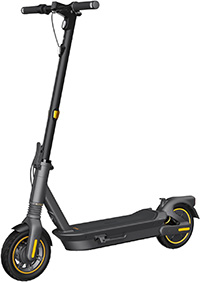 | Segway Ninebot Max G3 | Best allrounder | ∼$800 | ∼45 km/h (28 mph) | <80 km (<50 mi) |
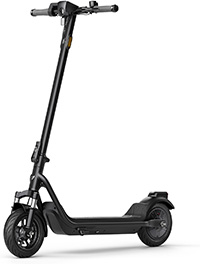 | NIU KQi100 | Budget/Allrounder | ∼$380 | ∼27 km/h (17 mph) | ∼29 km (18 mi) |
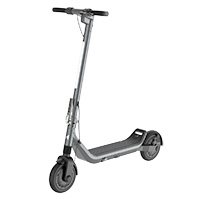 | Apollo Go | Best Under $1000 | ∼$899 | ∼45 km/h (28 mph) | ∼50 km (55 mi) |
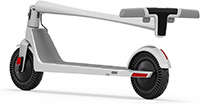 | Unagi Model One (E500) | Best Climber | ∼$890 | ∼32 km/h (20 mph) | ∼24 km (15 mi) |
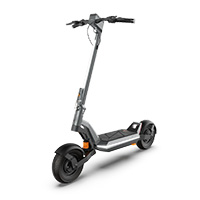 | Apollo Pro | Top of the line | ∼$2450 | ∼70 km/h (44 mph) | ∼100 km (62 mi) |
(As an Amazon Associate Nanowerk earns from qualifying purchases.)
Reviews of the best electric kick scooters
Hiboy KS4 Review
The Hiboy KS4 is a lightweight, foldable scooter designed for city commuting and short trips. It runs on a 36-volt, 7.5-amp-hour battery, which provides a maximum range of about 17 miles on a full charge. Charging takes approximately 5 hours, making it practical for overnight recharging. The 350-watt brushless hub motor allows the scooter to reach speeds of up to 18.6 miles per hour, a level suitable for navigating urban streets and bike lanes.
At 32.6 pounds, the KS4 is easy to fold and carry, which makes it convenient for riders who need to combine scooting with public transportation or store the scooter in smaller spaces. Its portability is one of its key advantages compared with heavier mid-range scooters.
The ride experience is shaped by 8-inch solid honeycomb tires. These avoid flats and require little maintenance, though they do not offer the same cushioning as larger pneumatic tires, making the scooter more comfortable on smooth pavement than on rough or uneven terrain.
The KS4 uses a dual braking system, combining a front electronic brake with a rear disc brake. Together, these provide reliable stopping power for its speed class. The scooter also includes front and rear lighting for visibility.
A digital display on the handlebar shows speed, distance, and battery status. Riders can connect the scooter to the Hiboy app via Bluetooth for additional control. The app allows customization of riding mode, adjustment of the energy recovery system, activation of cruise control, and remote locking and unlocking.
Overall, the Hiboy KS4 balances portability, app connectivity, and straightforward performance. It is best suited for riders who want a compact scooter for daily commutes and short trips, with features that emphasize convenience and ease of use rather than long range or high speed.
NIU KQi100 Review
The NIU 100F is a compact commuter scooter designed for portability and ease of use. Its foldable handlebars allow it to collapse into a size that fits easily in car trunks or small storage spaces, making it practical for riders who combine scooting with other forms of transport. At 38.8 pounds, it is light enough to carry short distances while still offering a solid frame for daily use.
The scooter is powered by a 300-watt motor, with peak output reaching 600 watts. This enables a top speed of 17.4 miles per hour and the ability to climb grades of up to 15 percent. Range is rated at about 18 miles per charge, making it best suited for short to medium urban trips rather than long-distance riding.
Ride comfort is supported by a wide footboard and 9.5-inch pneumatic tires, which absorb some of the vibration from uneven streets. The scooter supports riders up to 265 pounds, maintaining stability across a variety of city surfaces. Braking is handled by a front drum brake and rear regenerative braking, giving the 100F reliable stopping power while also recovering some energy.
Lighting and turn signals are integrated for safety in traffic, while Bluetooth connectivity through the NIU app expands functionality. Riders can remotely lock the scooter, adjust speed settings, set cruise control, and limit charging levels to extend battery life. These features give the 100F more flexibility than many scooters in its range category.
The scooter is UL certified and backed by a two-year warranty, which includes coverage for accessories and consumable parts. Combined with after-sales support, this adds reassurance for long-term use.
Overall, the NIU 100F is a practical choice for riders who prioritize portability, integrated safety features, and app connectivity over speed or extended range.
Apollo Go Review
The Apollo Go sits in the mid-range category of commuter scooters, designed for riders who need higher performance than entry-level models but without the bulk and cost of heavier machines. Its most notable feature is the use of dual hub motors, which together provide a peak output of around 1 500 watts. This setup enables quick acceleration and a top speed of roughly 28 miles per hour, which is sufficient for urban commuting while still manageable for daily use.
The 36-volt, 15 amp-hour battery offers a capacity of about 540 watt-hours. The company advertises a maximum range of 34 miles, though real-world riding conditions typically bring the figure closer to 20 to 30 miles depending on terrain, speed mode, and rider weight. Charging takes several hours, so overnight recharging is the most practical approach for regular use.
At 46 pounds, the scooter is not particularly lightweight. It folds for transport and includes a built-in grab handle at the back of the deck, but carrying it up stairs or through crowded spaces requires some effort. For most riders, the weight is acceptable if storage space is nearby.
Ride quality benefits from a dual suspension system that combines a front spring with a rear spring and rubber components. This setup smooths out smaller bumps and uneven pavement, though it does not eliminate vibration on rougher surfaces. Nine-inch pneumatic tubeless tires with self-healing lining add another layer of comfort and reduce the likelihood of punctures. Braking is handled by a rear drum brake supported by regenerative braking, offering consistent stopping power without requiring extensive maintenance.
Control and customization are areas where the scooter stands out. The DOT display is bright and easy to read, and pairing with the Apollo app unlocks additional adjustments. Riders can set acceleration response, tune regenerative braking strength, change speed limits, and modify turn signal behavior. The app integration also provides a security lock and performance tracking.
For visibility, the scooter includes front and rear LED lights as well as a stem-mounted LED strip. Water resistance is rated at IP66, which protects against dust and heavy splashes, giving riders confidence in wet conditions.
Overall, the Apollo Go strikes a balance between performance, portability, and price. It is well suited for riders who want a faster and more customizable scooter than basic single-motor models, but who still value practicality over extreme power or range. The main trade-offs are its weight and limited long-distance capability, but for medium-length commutes and city travel, it offers a reliable and versatile option.
Unagi Model One (E500) Review
The Unagi Model One Classic is a lightweight urban scooter that emphasizes portability and design while providing enough power for short commutes. It uses dual 250-watt hub motors for a combined nominal output of 500 watts, with peak power reaching around 800 watts. This allows the scooter to reach a top speed of about 20 miles per hour. Riders can switch between single- and dual-motor modes and choose from three riding settings—beginner, intermediate, and advanced—to adjust performance.
The battery capacity is 259 watt-hours, which translates to an expected range of 7 to 12 miles depending on terrain, rider weight, and speed. Charging takes roughly 4.5 hours for a full cycle, with 80 percent capacity reached in about 3.5 hours. This makes the scooter better suited for short daily trips rather than long-distance travel.
At 28.5 pounds, the Model One Classic is notably easy to carry compared with many other electric scooters. The folding mechanism is designed for one-click operation, and when folded the scooter measures about 37.8 by 16.5 by 15 inches, making it compact enough for most public transit or small storage spaces. Its construction uses aluminum and carbon fiber for the frame, and a magnesium handlebar that integrates controls and wiring in a clean layout.
The wheels are 7.5-inch solid rubber with a honeycomb structure, which avoids flat tires and provides limited shock absorption. However, the absence of a suspension system means that rides over uneven pavement or rough surfaces can feel firm. Braking is handled by dual electronic brakes supported by a rear stomp brake, offering consistent stopping ability without the upkeep of disc systems.
Other features include a built-in kickstand integrated into the deck, splash resistance rated at IPX4, and a maximum rider capacity of about 220 pounds. The scooter does not include app connectivity or remote locking functions; all controls are located on the handlebar.
Overall, the Unagi Model One Classic is best suited for riders who value portability and clean design over extended range or advanced suspension. It offers enough speed and flexibility for short urban trips while remaining one of the more manageable scooters to carry and store.
Segway Max G3 Review
The Segway Ninebot MAX G3 is built for long-distance commuting, combining extended range with durability and stability. Its 597 watt-hour battery, paired with SegRange optimization, offers a claimed maximum of 50 miles per charge. In practice, riders can expect closer to 35–40 miles depending on conditions. Charging takes about 3.5 hours with the standard charger or 2.5 hours with an optional fast charger, making it practical for overnight or mid-day recharging.
The scooter uses a motor tuned for steady, predictable acceleration rather than high performance, and includes SegRide stability control to smooth starts and balance. This makes it approachable for new riders while still capable of handling most urban commutes.
Construction is centered on an aluminum alloy frame tested under extensive simulated use, including over 12,000 miles of vibration and more than half a million suspension cycles. At its core, the G3 is designed to withstand years of frequent riding.
Ride quality is supported by 11-inch tubeless pneumatic tires that seal punctures up to 4 millimeters, combined with dual hydraulic suspension at the front and rear. This setup cushions uneven terrain effectively, making the scooter more versatile than smaller, rigid commuter models. Braking is handled by dual disc brakes with regenerative support, delivering reliable stopping power.
For visibility, the G3 includes a 6-watt adjustable headlight, rear lights, and underglow side lighting. It also meets ANSI/CAN/UL-2272 electrical safety standards through independent certification.
At a larger size and weight, the G3 is less convenient to carry, though it folds for transport and storage. Overall, it suits riders who prioritize long range, stability, and a comfortable ride over portability or high speed.
Apollo Pro Review
The Apollo Pro is positioned as a high-performance scooter designed for riders who want speed, stability, and advanced technology. It uses two motors rated up to 3,000 watts each, producing a combined peak of around 6,000 watts. This enables a top speed of roughly 44 miles per hour and the ability to tackle steep hills. Claimed range is between 31 and 62 miles per charge depending on mode and riding conditions, though actual figures will vary.
At about 93 pounds, the scooter is heavy compared with typical commuter models. The weight improves stability at higher speeds but limits portability, making it better suited for those who will store it at ground level rather than carry it up stairs.
Ride quality benefits from a large 12-inch tire setup paired with front adjustable hydraulic suspension and a maintenance-free rear rubber suspension. The system cushions most road imperfections and provides stability during fast rides, though it may feel stiff over highly uneven terrain. The self-healing pneumatic tires help reduce downtime from punctures.
One of the defining aspects of the Pro is its integration of technology. Riders can use their smartphone as the main display through a secure mount with wireless charging, while a secondary onboard display remains available. GPS tracking, remote locking, and app-based customization allow adjustment of acceleration, regenerative braking strength, and other ride parameters.
Braking performance comes from powerful regenerative braking supported by a strong mechanical system, providing reliable stopping power at speed. Lighting is integrated along the stem and deck, improving visibility for both rider and surrounding traffic.
Real-world feedback often highlights the smoothness of the ride, the stability at speed, and the overall sense of refinement compared with smaller scooters. However, the main trade-offs are weight and cost, which place it in a premium category.