

Space Exploration News – Latest Headlines
 Subscribe to our Space Exploration News feed
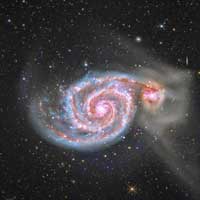
Life in the galaxy: maybe this is as good as it gets?
Researchers have found that rocky exoplanets, which formed early in the life of the galaxy seem to have had a greater chance of developing a magnetic field and plate tectonics than planets, which formed later. This means that if life exists in the Galaxy, it may have developed earlier than later, and that planets formed more recently may have less chance of developing life.
June 23, 2020 Read more
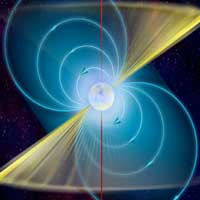
Future space travelers may follow cosmic lighthouses
For centuries, lighthouses helped sailors navigate safely into harbor. In the future, space explorers may receive similar guidance from the steady signals created by pulsars.
June 22, 2020 Read more
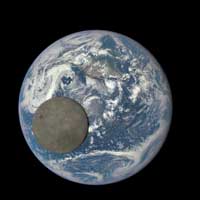
A new explanation for the far side of the Moon's strange asymmetry
Earth's Moon has a 'near side' that is perpetually Earth-facing and a 'far side', which always faces away from Earth. The composition of the Moon's near side is oddly different from its far side, and scientists think they finally understand why.
June 22, 2020 Read more
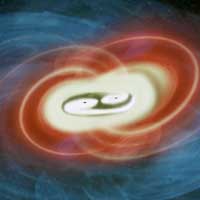
New research hints at the presence of unconventional galaxies containing 2 black holes
An international team of astronomers identifies periodic gamma-ray emissions from 11 active galaxies.
June 20, 2020 Read more
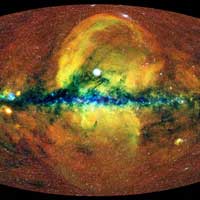
Our deepest view of the X-ray sky
The eROSITA telescope has provided a new, sharp view of hot and energetic processes across the Universe.
June 19, 2020 Read more
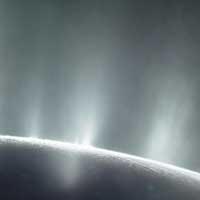
Are planets with oceans common in the galaxy? It's likely, NASA scientists find
Through a mathematical analysis of several dozen exoplanets, scientists learned something significant: More than a quarter of the exoplanets they studied could be ocean worlds, with a majority possibly harboring oceans beneath layers of surface ice, similar to Europa and Enceladus.
June 19, 2020 Read more
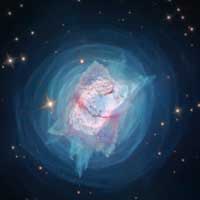
Stunning new hubble images reveal stars gone haywire
As nuclear fusion engines, most stars live placid lives for hundreds of millions to billions of years. But near the end of their lives they can turn into crazy whirligigs, puffing off shells and jets of hot gas. Hubble has dissected such crazy fireworks in two nearby young planetary nebulas.
June 18, 2020 Read more
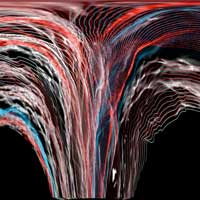
Scientists reveal a lost 8 billion light years of universe evolution
Every year, 2 million black hole mergers are missed - scientists work out how to detect them, revealing a lost 8 billion light years of Universe evolution.
June 18, 2020 Read more
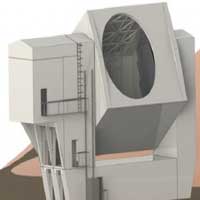
New video engages public in cosmic exploration
The two-minute video explains how researchers are measuring the oldest light in the universe with the highest telescopes on Earth.
June 18, 2020 Read more
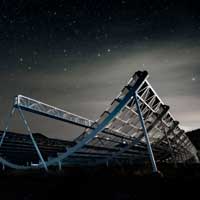
Astronomers detect regular rhythm of radio waves, with origins unknown
Signal from 500 million light years away is the first periodic pattern of radio bursts detected.
June 17, 2020 Read more
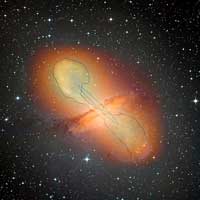
Quasar jets are particle accelerators thousands of light-years long
An international collaboration has shown that the very high-energy gamma-ray emission from quasars, galaxies with a highly energetic nucleus, is not concentrated in the region close to their central black hole but in fact extends over several thousand light-years along jets of plasma.
June 17, 2020 Read more
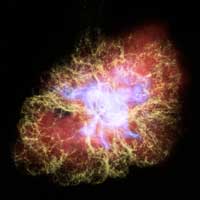
This supernova in a lab mimics the cosmic blast's splendid aftermath
Mystery enshrouds the birth of swirls typical for supernova remnants like the Crab Nebula. A new 'supernova machine' may help solve it.
June 17, 2020 Read more
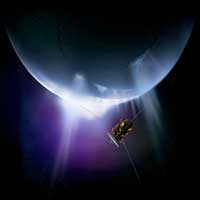
If there is life out there, can we detect it?
Instruments on-board future space missions are capable of detecting amino acids, fatty acids, and peptides, and even identify ongoing biological processes on ocean moons in our Solar System.
June 16, 2020 Read more
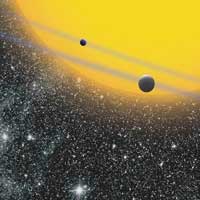
As many as six billion Earth-like planets in our galaxy, according to new estimates
There may be as many as one Earth-like planet for every five Sun-like stars in the Milky way Galaxy, according to new estimates by astronomers using data from NASA's Kepler mission.
June 16, 2020 Read more
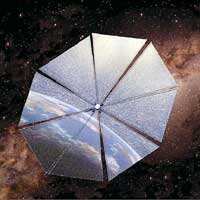
Atomic physics: radiation pressure with recoil
Light exerts a certain amount of pressure onto a body: sun sails could thus power space probes in the future. However, when light particles hit an individual molecule and knock out an electron, the molecule flies toward the light source. Atomic physicists have now observed this for the first time, confirming a 90 year-old theory.
June 15, 2020 Read more
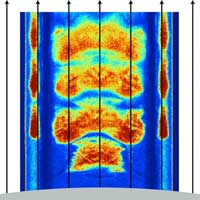
Why pulsars shine bright: A half-century-old mystery solved
Intense radio emissions produced by the fast-spinning stars are caused by newborn particles interacting with powerful electromagnetic fields, new plasma simulations suggest.
June 15, 2020 Read more

Research sheds new light on intelligent life existing across the galaxy
Is there anyone out there? This is an age-old question that researchers have now shed new light on with a study that calculates there could be more than 30 intelligent civilizations throughout our Galaxy. This is an enormous advance over previous estimates which spanned from zero to billions.
June 15, 2020 Read more
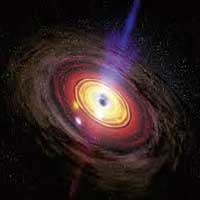
Innovative model provides insight into the behavior of the black hole at the center of our galaxy
Like most galaxies, the Milky Way hosts a supermassive black hole at its center. Called Sagittarius A*, the object has captured astronomers' curiosity for decades. And now there is an effort to image it directly.
June 12, 2020 Read more