

Space Exploration News – Latest Headlines
 Subscribe to our Space Exploration News feed
NASA's RXTE satellite decodes the rhythm of an unusual black hole (w/video)
Astronomers have uncovered rhythmic pulsations from a rare type of black hole 12 million light-years away by sifting through archival data from NASA's Rossi X-ray Timing Explorer satellite.
August 19, 2014 Read more
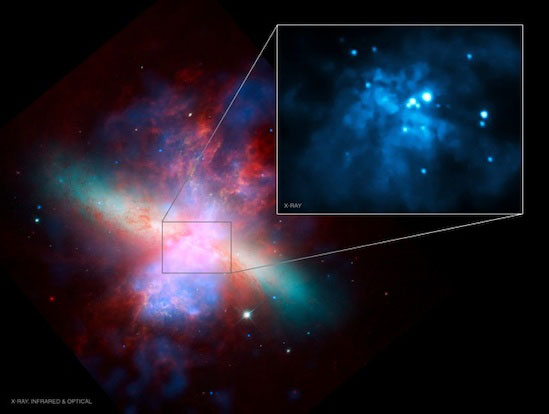
Fascinating rhythm: Light pulses illuminate a rare black hole
Astronomers have accurately measured - and thus confirmed the existence of - a rare intermediate-mass black hole about 400 times the mass of our sun in a galaxy 12 million light years from the Milky Way. The finding uses a technique never applied in this way before, and opens the door to new studies of these mysterious objects.
August 17, 2014 Read more
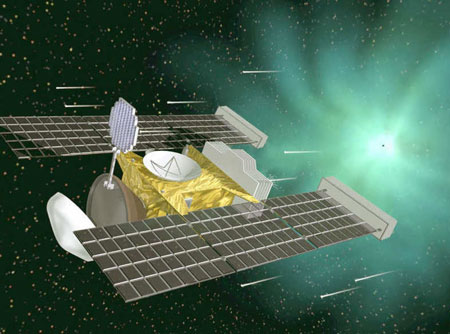
Interstellar dust - each grain is different
The interstellar dust particles from the Stardust mission show great variations in their elemental composition and structure.
August 14, 2014 Read more
New Milky Way maps help solve stubborn interstellar material mystery
An international team of sky scholars has produced new maps of the material located between the stars in the Milky Way. The results should move astronomers closer to cracking a stardust puzzle that has vexed them for nearly a century.
August 14, 2014 Read more
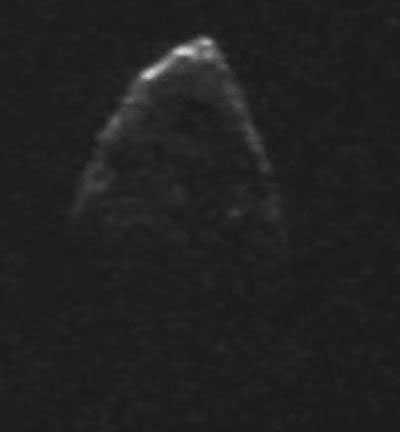
Research uncovers forces that hold gravity-defying near-earth asteroid together
A research team studied near-Earth asteroid 1950 DA and discovered that the body, which rotates so quickly it defies gravity, is held together by cohesive forces called van der Waals, never detected before on an asteroid.
August 13, 2014 Read more
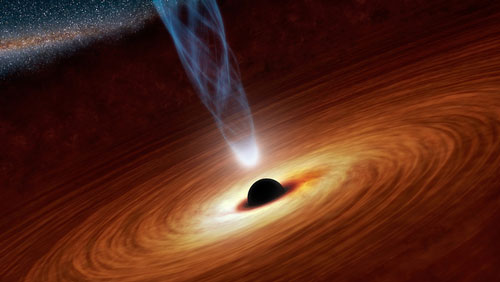
NuSTAR sees rare blurring of black hole light
NASA's Nuclear Spectroscopic Telescope Array (NuSTAR) has captured an extreme and rare event in the regions immediately surrounding a supermassive black hole. A compact source of X-rays that sits near the black hole, called the corona, has moved closer to the black hole over a period of just days.
August 12, 2014 Read more
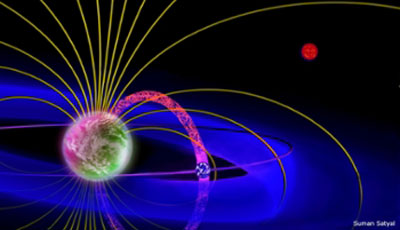
Follow the radio waves to exomoons, physicists say
Scientists hunting for life beyond Earth have discovered more than 1,800 planets outside our solar system, or exoplanets, in recent years, but so far, no one has been able to confirm an exomoon. Now, physicists believe following a trail of radio wave emissions may lead them to that discovery.
August 12, 2014 Read more
Baby black holes zigzagged, ate a lot to become quasars
Far-off, ancient quasars appear to us in their 'baby photos' taken less than a billion years after the Big Bang: monstrous infants in a young universe.
August 11, 2014 Read more
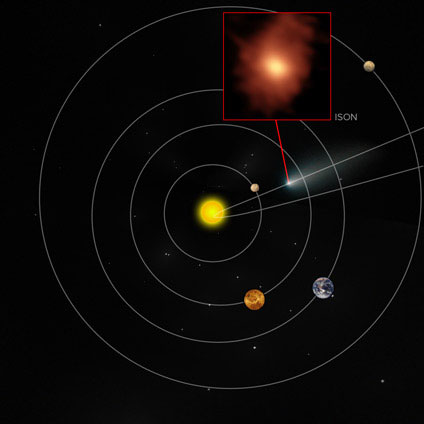
Comets forge organic molecules in their dusty atmospheres (w/video)
An international team of scientists using the Atacama Large Millimeter/submillimeter Array (ALMA) has made incredible 3D images of the ghostly atmospheres surrounding comets ISON and Lemmon. These new observations provided important insights into how and where comets forge new chemicals, including intriguing organic compounds.
August 11, 2014 Read more
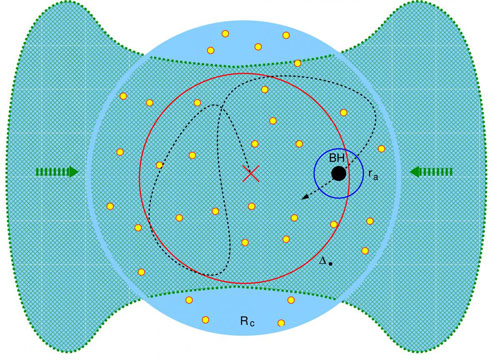
All-you-can-eat at the end of the Universe
A new model shows how early black holes could have grown to over a billion solar masses.
August 11, 2014 Read more
Violent solar system history uncovered by Australian meteorite
Planetary scientists have shed some light on the bombardment history of our solar system by studying a unique volcanic meteorite recovered in Western Australia. Captured on camera seven years ago falling on the WA side of the Nullarbor Plain, the Bunburra Rockhole Meterorite has unique characteristics that suggest it came from a large asteroid that has never before been identified.
August 8, 2014 Read more
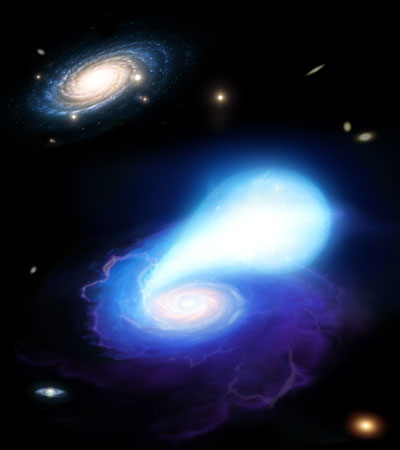
White dwarfs crashing into Neutron Stars explain loneliest supernovae
A research team of astronomers and astrophysicists have found that some of the Universe's loneliest supernovae are likely created by the collisions of white dwarf stars into neutron stars.
August 8, 2014 Read more
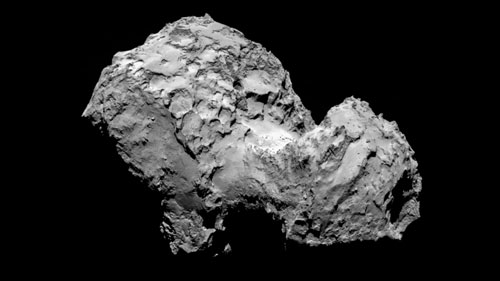
Successful rendezvous with Comet 67P/Churyumov-Gerasimenko
The Rosetta spacecraft has travelled over 6.4 billion kilometres, swung by planets, examined two asteroids during flybys, and spent more than two and a half years in hibernation during its 10-year journey. On 6 August 2014 at 11:30 CEST, with the Philae lander on board, it arrived at its target comet and entered into orbit.
August 8, 2014 Read more
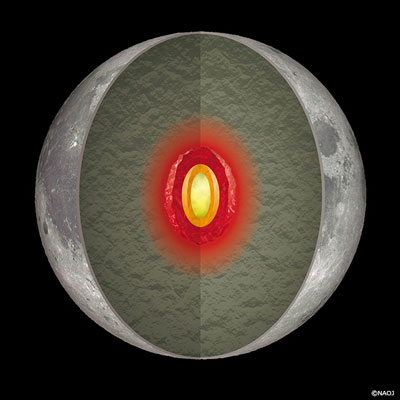
Still hot inside the Moon: Tidal heating in the deepest part of the lunar mantle
Researchers have found that there is an extremely soft layer deep inside the Moon and that heat is effectively generated in the layer by the gravity of the Earth.
August 8, 2014 Read more
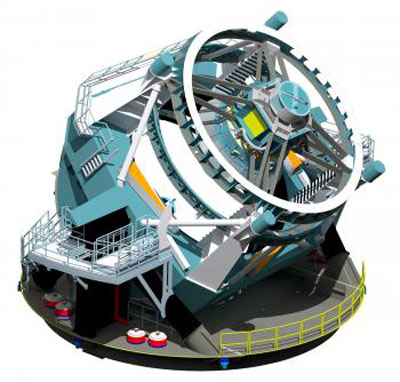
Taking astronomy to the next level
Large Synoptic Survey Telescope gets funding to begin construction.
August 8, 2014 Read more
Step closer to birth of the sun
Researchers are a step closer to understanding the birth of the sun.
August 7, 2014 Read more
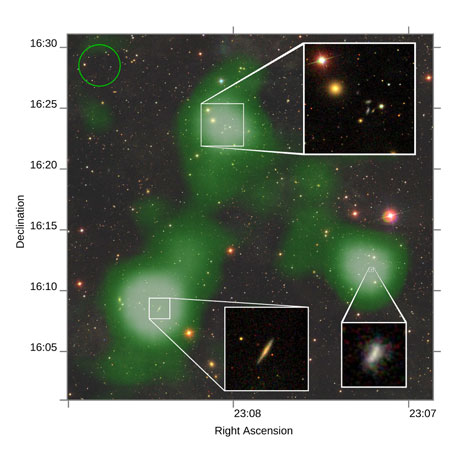
Astronomers find stream of gas - 2.6 million light years long
Astronomers have found a bridge of atomic hydrogen gas 2.6 million light years long between galaxies 500 million light years away.
August 7, 2014 Read more
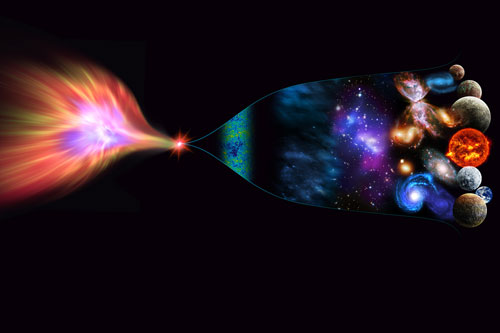
The black hole at the birth of the Universe
What we perceive as the big bang, researchers argue, could be the three-dimensional 'mirage' of a collapsing star in a universe profoundly different than our own.
August 7, 2014 Read more