

Space Exploration News – Latest Headlines
 Subscribe to our Space Exploration News feed
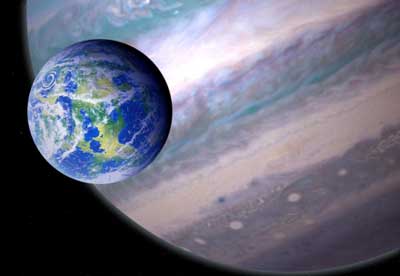
Distant moons may harbor life
Astronomers have identified 121 giant planets that may have habitable moons.
June 14, 2018 Read more
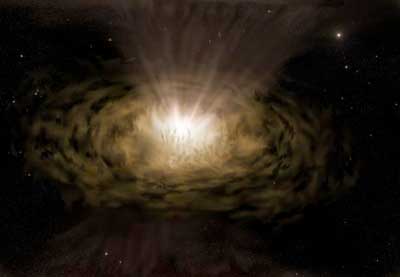
Dust clouds can explain puzzling features of active galactic nuclei
Mysterious features seen in light emitted from active galactic nuclei may be due to partial obscuration by dust clouds, according to new study.
June 14, 2018 Read more
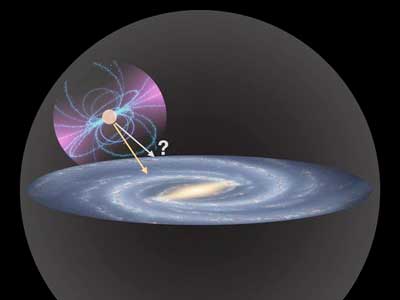
A new experiment to understand dark matter
This experiment already provides some improvement in constraining dark matter properties, but even more progress is promised by explorations in the centre of our Milky Way that are underway.
June 14, 2018 Read more
New GAIA data reveals mergers in Milky Way
Astronomers have discovered relics of merger events in the Milky Way halo. Five small groups of stars appear to represent mergers with smaller galaxies, while a big 'blob' comprising hundreds of stars appears to be the remnant of a large merger event.
June 12, 2018 Read more
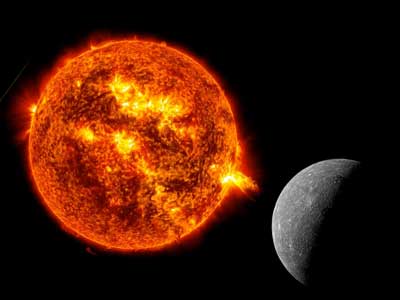
The true power of the solar wind
Electrically charged particles from the sun strike moons and planets with great force. The consequences of these impacts can now be explained.
June 12, 2018 Read more

Experiments help trace interstellar dust back to solar system's formation
Chemical studies show that dust particles originated in a low-temperature environment.
June 11, 2018 Read more
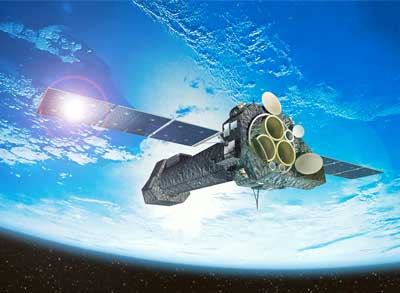
Evidence of elusive charge-exchange process in galaxy clusters detected by comprehensive x-ray analysis
X-ray data from galaxy clusters points to electron-stripping process at hot and cold galactic interface.
June 8, 2018 Read more
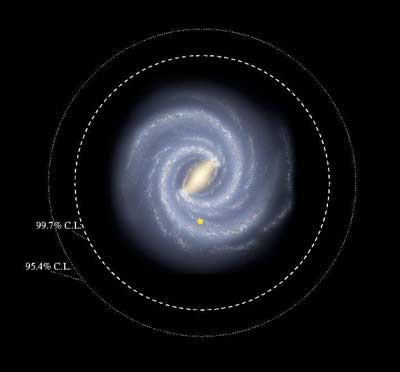
The disc of the Milky Way is bigger than we thought
Researchers have published a paper which suggests that if we could travel at the speed of light it would take us 200,000 years to cross the disc of our Galaxy.
June 7, 2018 Read more
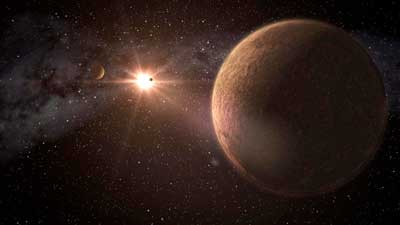
Researchers discover a system with three Earth-sized planets
Astronomers report the discovery of two new planetary systems, one of them hosting three planets with the same size of the Earth.
June 7, 2018 Read more
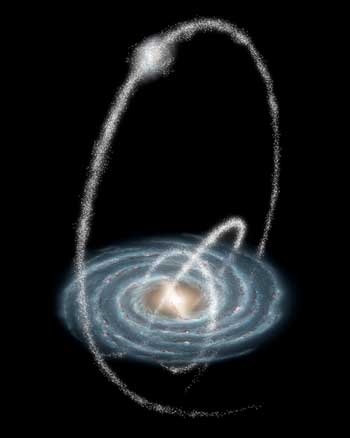
How do you weigh a galaxy? Especially the one you're in?
Pinning down the mass of a galaxy may seem like an esoteric undertaking, but scientists think it holds the key to unraveling the nature of the elusive, yet-to-be-seen dark matter, and the fabric of our cosmos.
June 7, 2018 Read more
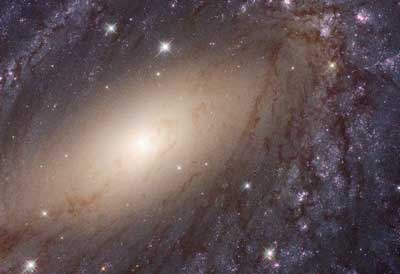
Data discrepancies may affect understanding of the universe
One of the unsolved mysteries in modern science is why the expansion of the universe appears to be accelerating. As astrophysicists look for answers in the mountains of data gathered from astronomical observations, they are finding that inconsistencies in that data might ultimately lead to the truth.
June 6, 2018 Read more

Alien apocalypse: Can any civilization make it through climate change?
Astronomers have inventoried a sizable share of the universe's stars, galaxies, comets, and black holes. But are planets with sustainable civilizations also something the universe contains? Or does every civilization that may have arisen in the cosmos last only a few centuries before it falls to the climate change it triggers?
June 5, 2018 Read more
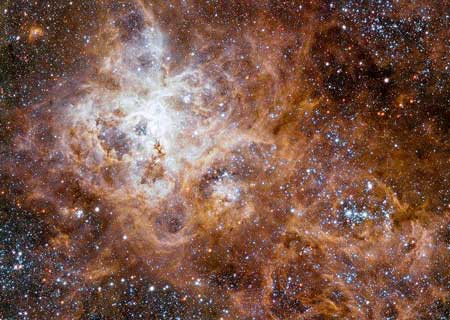
Chemical traces from star formation cast light on cosmic history
Fresh insight into how stars are formed is challenging scientists' understanding of the Universe.
June 4, 2018 Read more
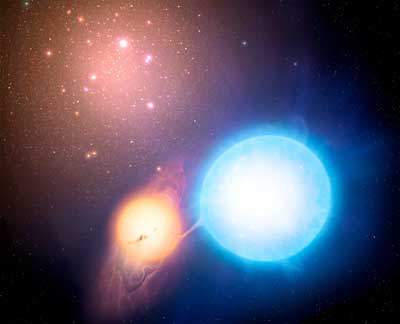
Globular clusters 4 billion years younger than previously thought
Once thought to be formed soon after the Universe itself, new research finds Globular Clusters may be only around 9 billion years old.
June 4, 2018 Read more
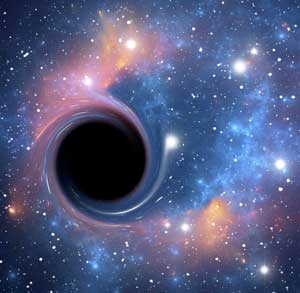
Black holes from an exacomputer
Even after the direct measurement of their gravitational waves, there are still mysteries surrounding black holes. What happens when two black holes merge, or when stars collide with a black hole? This has now been simulated by researchers using a novel numerical method.
May 28, 2018 Read more
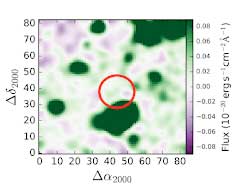
Lightening up dark galaxies
The identification of at least six candidates for dark galaxies could help filling an important gap in our understanding of galaxy evolution.
May 23, 2018 Read more
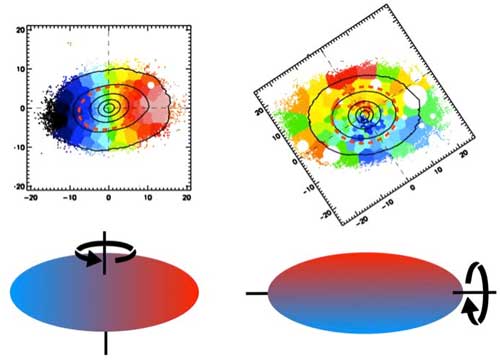
Spinning rugby balls: The rotation of the most massive galaxies
By targeting the most massive galaxies in our universe, astronomers have studied how their stars move. The results are surprising: while half of them spin around their short axis as expected, the other half turn around their long axis.
May 23, 2018 Read more
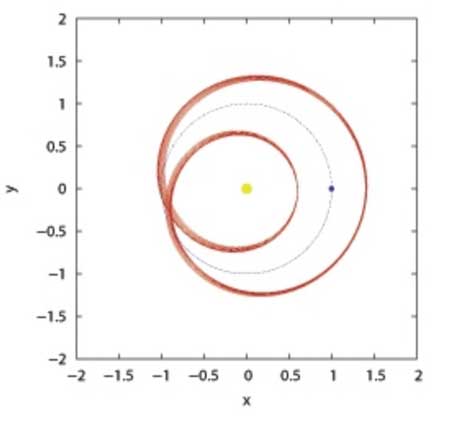
Extrasolar asteroid has been orbiting the sun for 4.5 billion years
The object is revolving around the sun in the vicinity of Jupiter but in the opposite direction from most other celestial bodies.
May 21, 2018 Read more