

Nanotechnology News – Latest Headlines
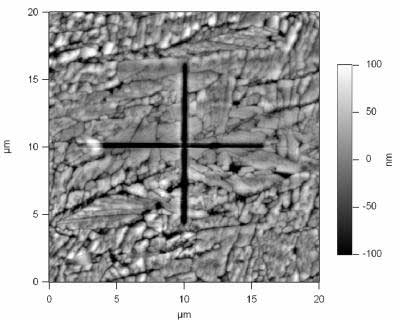
World's smallest controlled heat source studies explosives at the nanoscale
Using nanometer scale analysis techniques and quantities too small to explode, researchers have mapped the temperature and length-sale factors that make explosives behave the way they do.
September 8, 2006 Read more
Spinning new theory on particle spin brings science closer to quantum computing
Physicists have devised a potentially groundbreaking theory demonstrating how to control the spin of particles without using superconducting magnets.
September 8, 2006 Read more
New report on nanotechnology in agriculture and food looks at potential applications, benefits and risks
The nanotech food market is growing rapidly and will reach over $20 billion by 2010.
September 7, 2006 Read more
Beyond Beauty lifts the lid on nanotechnology
The first of two conferences at the Paris expo with a focus on nanotechnology relating to UV filters.
September 7, 2006 Read more
From bubbles to capsules
Making silicon dioxide nanocapsules by frothing polymers with supercritical carbon dioxide.
September 7, 2006 Read more
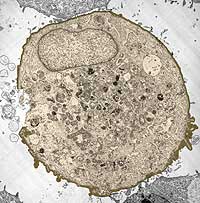
Ultrasound can deliver drugs
Researchers have shown how ultrasound energy can briefly "open a door" in the protective outer membranes of living cells to allow entry of drugs and other therapeutic molecules.
September 6, 2006 Read more
Container transport on a nano scale
By using polymers containing iron, it is possible to make intelligent containers of which the access of molecules can be regulated in a chemical way.
September 6, 2006 Read more
Engineers demonstrate laser nano antenna
New laser could lead to higher density DVDs, more powerful microscopes and novel tools for biology and engineering.
September 6, 2006 Read more
Nanoscientists create biological switch from spinach molecule
Nanoscientists have transformed a molecule of chlorophyll-a from spinach into a complex biological switch that has possible future applications for green energy, technology and medicine.
September 5, 2006 Read more
Switchable lotus effect
Researchers have synthesized a compound in the diarylethene family whose surface becomes super-water-repellent on command.
September 5, 2006 Read more
Targeting buckyballs with antibodies
A new method for attaching tumor-targeting antibodies to the surface of buckyballs.
September 5, 2006 Read more
Improving magnetic nanoparticle design
Numerous groups are attempting to use iron nanoparticles in medical imaging applications. Researchers are also developing magnetic nanoparticles as miniature thermal scalpels for killing tumors as well as imaging them.
September 5, 2006 Read more
Quantum dots probe cell death
Aiming to help researchers get a better handle on how anticancer agents are triggering cell death, investigator have developed a quantum dot nanodevice that can detect and image apoptosis, also known as programmed cell death.
September 5, 2006 Read more
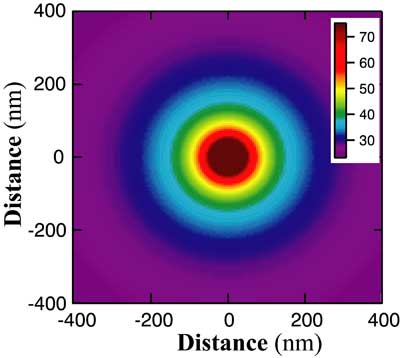
Gold nanoparticles prove to be hot stuff
Gold nanoparticles can heat up fast, by tens of degrees in just a few nanoseconds, which could either damage the molecules or help study them.
August 31, 2006 Read more
Nano-signals get a boost from magnetic spin waves
Researchers have figured out how nanoscale microwave transmitters gain greater signal power than the sum of their parts.
August 31, 2006 Read more
Molecular motor helps cells tell which way is up
Researchers show how a newly discovered molecular motor helps a cell determine which way is up.
August 31, 2006 Read more
 Subscribe to our Nanotechnology News feed