

Nanotechnology News – Latest Headlines
Researchers prove existence of new type of electron wave
New research has proved the existence of a new type of electron wave on metal surfaces: the acoustic surface plasmon.
July 4, 2007 Read more
European Commission wants to run nanotechnology projects smoother
The European Commission will spend €1.8 million (approx. $2.4 million) over the next four years on "Exploitation strategy and innovation consultants for nanosciences, nanotechnologies, materials and new production technologies".
July 4, 2007 Read more
Buckyball discovery team reunion featured at nanoTX'07
Discovery of the Buckyball at Rice University in 1985 that led to a Nobel Prize for three of the five team members, and ushered in the modern era of nanotechnology, will be recalled by surviving team members October 2 in Dallas, Texas.
July 3, 2007 Read more
Device could put disease detection in the palm of a hand
The nanocytometer is a pocket-sized device that can rapidly identify diseases by testing a single drop of blood using an inexpensive disposable cartridge. The cartridges contain a silicon chip laden with artificial nanopores that mimic the filtration system of human cells.
July 3, 2007 Read more
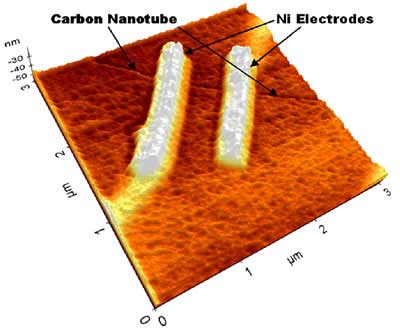
New nanotube research could transform electronics industry
Researchers hope to unlock capabilities of carbon nanotubes.
July 3, 2007 Read more
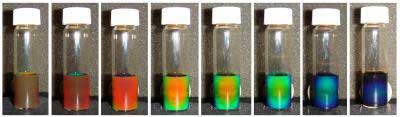
A simple magnet can control the color of a liquid
Controlling the color of very small particles of iron oxide suspended in water simply by applying an external magnetic field to the solution.
July 3, 2007 Read more
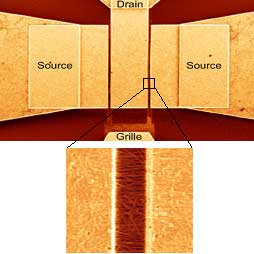
Carbon nanotube transistors get faster
French researchers have succeeded in making transistors from carbon nanotubes on a silicon substrate.
July 3, 2007 Read more
...and then the nanobots kill the bacteria!
Science fiction? No. Satire? No. A serious TV news report? Yes!
July 3, 2007 Read more
Nanotechnology expertise for the engineering workforce
To help engineering professionals and organizations benefit from the surge in nanotechnology R&D, Johns Hopkins' Engineering and Applied Science Programs for Professionals offers a Nanotechnology Option within its Master of Materials Science and Engineering program.
July 2, 2007 Read more
Nanosphere-based catalyst could revolutionize biodiesel production
Nanospheres could make production cheaper, faster and less toxic. They could produce a cleaner fuel and a cleaner glycerol co-product. And they could be used in existing biodiesel plants.
July 2, 2007 Read more
Tough tubes - Carbon nanotubes endure heavy wear and tear
Study suggests nanotube structures hold potential for creating synthetic tissue, muscles.
July 2, 2007 Read more
Cure for cancer, age-related diseases coming into view
Developments in nanotechnology help exploring ways to instill aging tissues and organs with indefinite life.
July 2, 2007 Read more
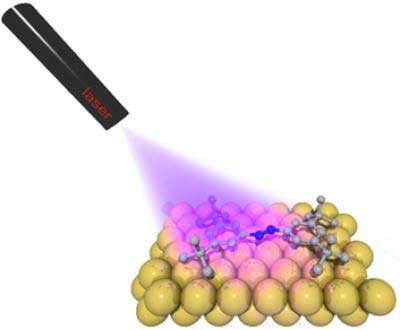
Remotely controlled nanomachines
By shining ultraviolet laser light on tiny molecules of azobenzene adhered on a layer of gold, scientists could force the molecules to change shape at will. Potentially, the molecules could be incorporated into nanomachines in the form of remotely controlled switches, pistons or other movable components.
July 2, 2007 Read more
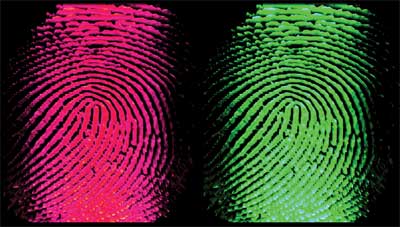
Nanotechnology fingerprint analysis looks at more than just patterns
Police could use fingerprints to detect if suspects have handled explosives or cocaine in a process being developed by a UK nanotechnology company.
July 1, 2007 Read more
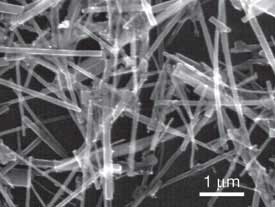
Nanowire shines light on subwavelength microscopy
Researchers in the US and Japan have created a nanoscopic 'torch' that shines visible laser light on nanoscale structures, imaging them with high resolution.
June 29, 2007 Read more
Pilot scheme to bring European and Australian researchers closer together
New pilot scheme to bring European and Australian researchers closer together includes nanotechnology research.
June 29, 2007 Read more
 Subscribe to our Nanotechnology News feed