

Nanotechnology News – Latest Headlines
Optical scientists add new, practical dimension to holography
University of Arizona optical scientists have broken a technological barrier by making three-dimensional holographic displays that can be erased and rewritten in a matter of minutes.
February 6, 2008 Read more
The MONA Nanophotonics Technology Roadmap now available
During 2 years, the MONA ('Merging Optics and Nanotechnologies') consortium has been working through workshops, symposia and expert interviews at establishing a roadmap for photonics and nanotechnologies in Europe. Almost 300 people from industry and academia have been involved in the construction of this roadmap that gives insight into the future of materials, equipment, processes and applications. It also highlights the European position and outlook with respect to nanophotonics, and offers recommendations.
February 6, 2008 Read more
Pitt receives $1m grant to research ultrafast time-resolved microscopy of electronic nanomaterial
Researchers will develop revolutionary method to probe molecular structures.
February 6, 2008 Read more
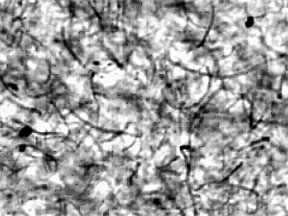
Shear ingenuity: Tweaking the conductivity of nanotube composites
New measurements by scientists at the National Institute of Standards and Technology (NIST) have uncovered an intriguing wrinkle. For a given CNT concentration, the electrical properties of the composite can be tuned from being a conductor to a non-conductor simply by changing processing conditions - basically how fast the polymer flows.
February 6, 2008 Read more
IMEC realized full CMOS multiple antenna receiver for 60 GHz
At today's IEEE International Solid State Circuit Conference, IMEC introduced its prototype of a 60GHz multiple antenna receiver, and invites industry to join its 60GHz research program. The 60GHz band offers massive available bandwidth that enables very high bit rates of several Gbits-per-second at distances up to 10 meters (about 33 feet).
February 6, 2008 Read more
Nanotechnology: Towards reducing animal testing
This Conference, the first of its kind in Europe, will examine how nanotechnology could contribute to alternatives to animal testing.
February 6, 2008 Read more
Holst Centre reports breakthrough in organic RFID
The plastic RFID tag builds on IMEC's plastic rectifier technology combined with Polymer Visionâ??s organic electronics technology and approaches item-level tagging requirements.
February 6, 2008 Read more
EUV research helps solve 193 resist problems
Leading-edge research into the requirements for extreme ultraviolet (EUV) photoresist is helping to solve some of the problems encountered by 193 nm litho technology as it ventures into increasingly smaller CDs.
February 6, 2008 Read more
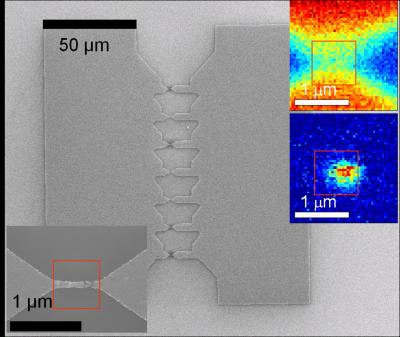
Scientists make breakthrough in single-molecule sensing
Simultaneous optical and electronic measurements on same molecule.
February 6, 2008 Read more

New funding to charge energy research at UCL and the London Centre for Nanotechnology
Professors Neal Skipper and Franco Cacialli, of the London Centre for Nanotechnology and the Department of Physics & Astronomy, University College London, have been awarded a £200,000 laboratory refurbishment grant to help them develop alternative fuel supplies for transport and electricity generation.
February 6, 2008 Read more
New devices to boost nematode research on neurons and drugs
University of Oregon-led project leads to two nanotech-driven tools for biologists, neuroscientists.
February 6, 2008 Read more
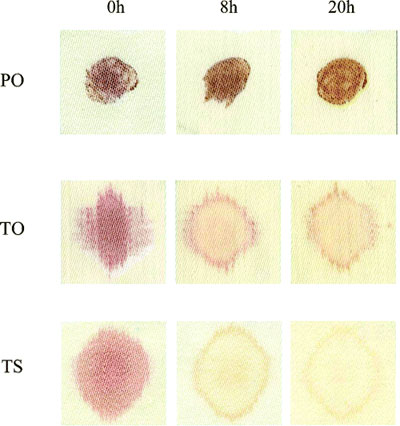
Nanotechnology to fight red wine stains
Wool skirts and silk ties may avoid those pricey trips to the dry-cleaner in the future and clean themselves, researchers in Australia and China suggest in a new study.
February 6, 2008 Read more
'Recordable' proteins as next-generation memory storage materials
Move over, compact discs, DVDs, and hard drives. Researchers in Japan report progress toward developing a new protein-based memory device that could provide an alternative to conventional magnetic and optical storage systems, which are quickly approaching their memory storage capacities.
February 6, 2008 Read more
European Commission gives grant to investigate transatlantic oversight of nanotechnology
Researchers at the London School of Economics and Political Science (LSE), Chatham House, Environmental Law Institute (ELI) and the Project on Emerging Nanotechnologies (PEN), an initiative of Woodrow Wilson International Center for Scholars and The Pew Charitable Trusts, have been awarded a $587,000 European Commission grant to conduct an international research project on regulating nanotechnologies in the European Union and United States.
February 6, 2008 Read more
World-class research at University of Toronto to help reduce threat of global epidemic
Developing a portable device that will help prevent, identify and contain infectious diseases such as SARS, is the goal of a new University of Toronto research project. The project is one of four cutting-edge research projects at the University of Toronto to receive funding from the McGuinty government.
February 6, 2008 Read more
A new direction for Vietnamese science and technology
To catch up with the development of global science and technology, Vietnam should have proper investment plans, prepared for ideas and combining scientists and experts with programmes which have completely new contents, and establishing training and research centres. Apart from traditional laboratories, two National Universities have begun to do this.
February 6, 2008 Read more
 Subscribe to our Nanotechnology News feed