

Nanotechnology News – Latest Headlines
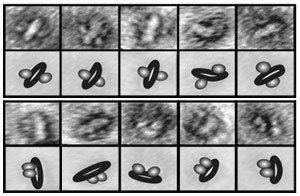
Nanoscale tool allows scientists to study membrane proteins one at a time
Researchers at Rockefeller University have now created a tiny tool, more than 10,000 times smaller than the diameter of a human hair, capable of encasing single membrane proteins from living cells. The new system, which resembles a nanoscale sushi roll, will allow investigators to individually stimulate these key proteins with specific molecules and signals in order to precisely define the biological reactions that result.
March 6, 2008 Read more
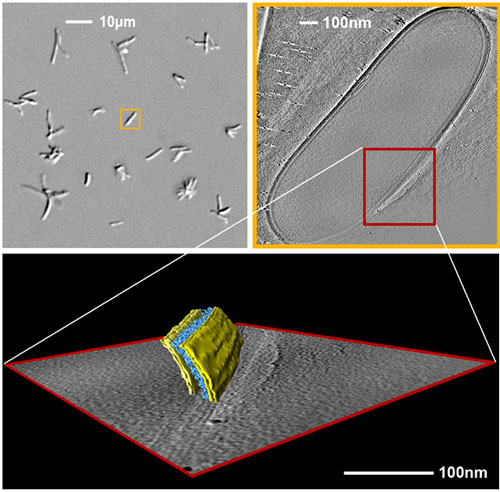
Tuberculosis bacterium is double-protected
The first 3-D images that disclosure a double membrane surrounding mycobacteria were recorded by Martinsried scientists, ending a long scientific debate about the mycobacterial outer membrane and opening new pathways to improve the development of chemotherapeutic substances against tuberculosis.
March 6, 2008 Read more
Ottawa invests $1 million in University of Victoria research, tech transfer
Science research and technology transfer at the University of Victoria got a shot in the arm on Feb. 20 with a $1.04-million grant from Western Economic Diversification Canada.
March 6, 2008 Read more
Japan's goverment to evaluate safety of nanomaterials
Japan's Ministry of Health, Lobour and Welfare held the first meeting of study groups on the safety of nanomaterials such as carbon nanotube and fullerene at a joint government building in Chiyoda Ward, Tokyo, March 3, 2008.
March 6, 2008 Read more
Researchers control growth rate of replacement blood vessels, tissues
Researchers have discovered a way to control the growth rate of replacement tissue and the formation of new blood vessels, which solves one of the vexing problems of growing replacement tissue to treat injuries and trauma in humans.
March 6, 2008 Read more
Hybrid materials: Exciting interdisciplinary field offering future solutions for industry
Elsevier, a publisher of scientific, technical and medical information products and services, announced today Hybrid Materials 2009: The First International Conference on Multifunctional, Hybrid and Nanomaterials which will take place in Tours, France, 15-19 March 2009.
March 6, 2008 Read more
Revision of risk-assessment methods needed to evaluate potential risks in the use of certain Nanomaterials in cosmetic products
In order to properly assess the potential risk of insoluble and/or biopersistent nanomaterials used in cosmetics either new risk-assessment methods have to be developed or the existing ones have to be improved, an EU scientific committee concludes.
March 6, 2008 Read more
Johns Hopkins NanoBio Symposium Set for May 1-2. New workshop focuses on nanotechnology for cancer
The Johns Hopkins Institute for NanoBioTechnology hosts its second annual NanoBio Symposium on May 1-2, 2008 at the School of Medicine in Baltimore, Md.
March 6, 2008 Read more
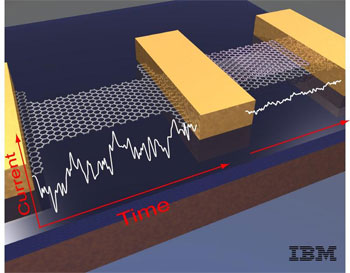
IBM scientists 'quiet' unruly electrons in atomic layers of graphite
For the first time anywhere, IBM scientists have found a way to suppress unwanted interference of electrical signals created when shrinking graphene, a two-dimensional, single-atomic layer thick form of graphite, to dimensions just a few atoms long.
March 6, 2008 Read more
NanoCharM: an EU Project aimed at bringing Nanomaterials into mainstream markets
NanoCharM, a Coordination and Support Action funded by the EU is notable for two firsts'. Not only was it the first to be signed under the EU's Seventh Framework Programme, with a start date of January 1st 2008, but was also the highest ranked CSA project to be approved.
March 6, 2008 Read more
Nanotechnology struggles to grow up in the Chicago area
The nascence of nanotech companies in the Chicago area during the last decade has built one of the biggest nano hubs in the U.S., industry leaders, analysts and other experts say.
March 6, 2008 Read more
Nanoelectronics center to open at Notre Dame
Governor Mitch Daniels joined executives from IBM and the Semiconductor Research Corporation today to announce plans to open a new $61 million nanoelectronics research center on the campus of the University of Notre Dame, creating new research opportunities to develop atomic-scale technologies that will drive future breakthroughs in computing.
March 5, 2008 Read more
Call for papers, abstracts for nanoTX 08, due April 30
nanoTX USA'08, International Nanotechnology Conference & Trade Expo to be held at Hyatt Regency Dallas Convention Hotel, Dallas, Texas, USA, October 2-3, 2008, seeking expert presenters.
March 5, 2008 Read more
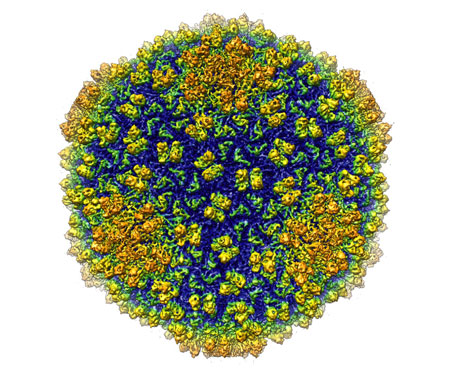
New technique takes a big step in examination of small structures
A team led by a Purdue University researcher has achieved images of a virus in detail two times greater than had previously been achieved.
March 5, 2008 Read more
Advances in science and technology and the Chemical Weapons Convention
With the second review conference of the Chemical Weapons Convention (CWC) approaching in April, a raft of studies have appeared making clear that fundamental changes in science and technology are affecting the implementation of the treaty and that it must be adapted to take account of them.
March 5, 2008 Read more
Analytica Conference in Muenchen: Nanoanalytik zwischen Physik, Chemie und Biologie
Die Nanoanalytik bildet in diesem Jahr einen deutlichen Schwerpunkt der Analytica Conference, die im Rahmen der Analytica vom 1. bis 3. April als bedeutendste europaeische Analytiker-Tagung stattfindet. Drei wissenschaftliche Gesellschaften, die Gesellschaft Deutscher Chemiker (GDCh), die Gesellschaft furr Biochemie und Molekularbiologie (GBM) und die Deutsche Vereinte Gesellschaft fuer Klinische Chemie und Laboratoriumsmedizin (DGKL), zeichnen für das Programm verantwortlich.
March 5, 2008 Read more
 Subscribe to our Nanotechnology News feed