

Cleantech and Environmental News – Latest Headlines
 Subscribe to our Cleantech News feed
Better fuel economy: Billions and billions saved
As fuel economy of new vehicles improved 18 percent over the past five years, billions of gallons of gas and billions of pounds of emissions have been saved, University of Michigan researchers say.
October 15, 2012 Read more
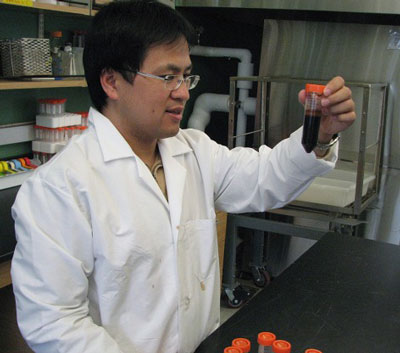
Evolving microbes help engineers turn bio-oil into advanced biofuels
Microbes are working away in an Iowa State University laboratory to ferment biofuels from the sugar and acetate produced by rapidly heating biomass such as corn stalks and sawdust.
October 11, 2012 Read more
Researchers develop new way to determine amount of charge remaining in battery
Researchers from North Carolina State University have developed a new technique that allows users to better determine the amount of charge remaining in a battery in real time. That?s good news for electric vehicle drivers, since it gives them a better idea of when their car may run out of juice.
October 8, 2012 Read more
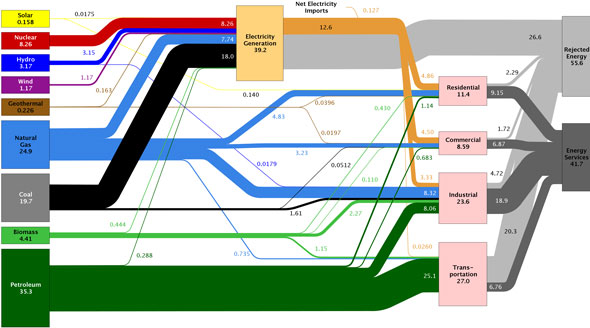
Americans use more efficient and renewable energy technologies
Americans used less energy in 2011 than in the previous year due mainly to a shift to higher-efficiency energy technologies in the transportation and residential sectors. Meanwhile, less coal was used but more natural gas was consumed according to the most recent energy flow charts released by Lawrence Livermore National Laboratory.
October 8, 2012 Read more
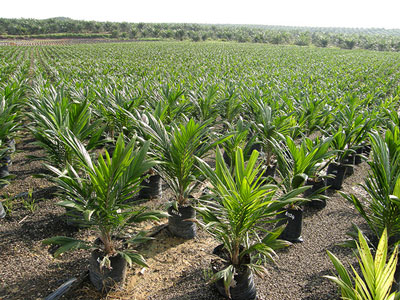
Researchers show oil palm plantations are clearing carbon-rich tropical forests in Borneo
Demand for palm oil is driving the deforestation of forests in Borneo, as trees are cleared to make way for the planting of oil farm plantations, which will send carbon dioxide, a global-warming gas, into the atmosphere.
October 8, 2012 Read more
Salt power: Watt's next in rechargeable batteries?
Reza Shahbazian-Yassar thinks sodium might be the next big thing in rechargeable batteries.
October 8, 2012 Read more
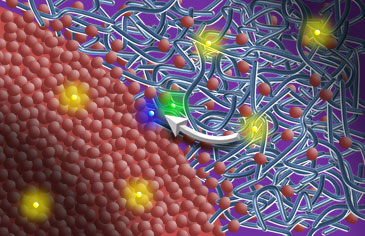
Study reveals how solvent mixtures affect organic solar cell structure
Controlling "mixing" between acceptor and donor layers, or solar cell domains, in polymer-based solar cells could increase their efficiency, according to a team of researchers that included physicists from North Carolina State University. Their findings shed light on the inner workings of these solar cells, and could lead to further improvements in efficiency.
October 4, 2012 Read more
Enough wind to power global energy demand
New research from Carnegie's Ken Caldeira examines the limits of the amount of power that could be harvested from winds, as well as the effects high-altitude wind power could have on the climate as a whole.
September 9, 2012 Read more

LEDs winning light race to save energy, the environment
Report compares environmental impacts of LED, CFL and incandescent lights.
September 5, 2012 Read more

More carbon dioxide leads to less clouds
A new feedback mechanism operating between vegetation and cloud formation could enhance the climate change.
September 3, 2012 Read more
Delivering solar geoengineering materials may be feasible and affordable
A cost analysis of the technologies needed to transport materials into the stratosphere to reduce the amount of sunlight hitting Earth and therefore reduce the effects of global climate change has shown that they are both feasible and affordable.
August 31, 2012 Read more

A long-term view of critical materials: From coal to ytterbium
Berkeley Lab scientists take a multidisciplinary approach to becoming more resilient to current and future materials shortages.
August 28, 2012 Read more
What motivates rejection of (climate) science?
Researchers from The University of Western Australia have examined what motivates people who are greatly involved in the climate debate to reject scientific evidence.
August 23, 2012 Read more
Organic waste from the racing weekend to be turned into valuable compost
Lausitzring and BASF launch pilot project with compostable and disposable tableware at the ADAC Masters Weekend.
August 22, 2012 Read more
Biorefinery makes use of every bit of a soybean
Scientists today unveiled new technology intended to move soybeans, second only to corn as the top food crop in the U.S., along that same use-to-all path as a raw material for a wider portfolio of products.
August 22, 2012 Read more
Scientists put spotlight on marine power
A team of researchers from Israel and the United Kingdom has discovered that energy produced from the planet's oceans can increase twofold when novel methods for predicting wave power are used.
August 22, 2012 Read more
New solar panels made with more common metals could be cheaper and more sustainable
With enough sunlight falling on home roofs to supply at least half of America's electricity, scientists have described advances toward the less-expensive solar energy technology needed to roof many of those homes with shingles that generate electricity.
August 21, 2012 Read more
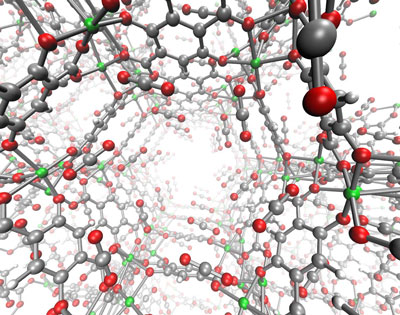
Speeding the search for better carbon capture
A computer model that can identify the best molecular candidates for removing carbon dioxide, molecular nitrogen and other greenhouse gases from power plant flues has been developed by researchers with the U.S. Department of Energy (DOE)?s Lawrence Berkeley National Laboratory (Berkeley Lab), the University of California (UC) Berkeley and the University of Minnesota. The model is the first computational method to provide accurate simulations of the interactions between flue gases and a special variety of the gas-capturing molecular systems known as metal-organic frameworks (MOFs).
August 21, 2012 Read more