

Biotechnology News – Latest Headlines
 Subscribe to our Biotechnology News feed

Scientists expand our understanding of biological nanowires
The movement of electrons across wires is what allows us to use electricity every day. Biological nanowires, microscopic wires made of proteins, have caught researchers' attention for their ability to carry electrons over long distances.
November 1, 2023 Read more

MXene-enhanced plasmonic sensing for ultrasensitive label-free miRNA detection
Researchers effectively exploited the unique properties of MXene to enhance the sensing performance of surface plasmon resonance (SPR) sensors. By spin-coating a thin layer of MXene nanosheets on the plasmonic substrate, the reflectivity can be significantly reduced, which results in a sharp phase change at the SPR angle.
October 31, 2023 Read more

'Plug and play' nanoparticles could make it easier to tackle various biological targets
Engineers have developed modular nanoparticles that can be easily customized to target different biological entities such as tumors, viruses or toxins.
October 30, 2023 Read more

Ultrafast x-ray pulses force atoms to give up their electronic secrets
A new spectroscopy technique could help reveal the inner workings of metal catalysts and the proteins involved in photosynthesis in plants.
October 28, 2023 Read more

Unlocking sugar to generate biofuels and bioproducts
Engineered enzymes could generate biomass optimized for conversion into fuel and other useful products.
October 27, 2023 Read more

Plants transformed into detectors of dangerous chemicals
What if your house plant could tell you your water isn't safe? Scientists are closer to realizing this vision, having successfully engineered a plant to turn beet red in the presence of a banned, toxic pesticide.
October 23, 2023 Read more

Researchers develop DANGER analysis tool for the safer design of gene editing
Scientists developed a software tool called DANGER (Deleterious and ANticipatable Guides Evaluated by RNA-sequencing) analysis that provides a way for the safer design of genome editing in all organisms with a transcriptome.
October 23, 2023 Read more

New device rapidly decodes RNA for faster cancer diagnosis
Researchers have developed an innovative device that separates extracellular RNA carriers using pH levels. This allows for faster and cheaper diagnosis of diseases like cancer.
October 23, 2023 Read more
Mimics human tissue, fights bacteria: new biomaterial hits the sweet spot
A new lab-made substance mimics human tissue and could reduce or replace the use of animal-derived materials in biomedical research.
October 23, 2023 Read more

Wobbly gel mat trains muscle cells to work together
The vibrating platform could be useful for growing artificial muscles to power soft robots and testing therapies for neuromuscular diseases.
October 20, 2023 Read more

3D-printed, soft, living materials made with algae glow under stress
Researchers developed soft yet durable materials that glow in response to mechanical stress, such as compression, stretching or twisting. The materials derive their luminescence from single-celled algae known as dinoflagellates.
October 20, 2023 Read more
Unlocking the secrets of cell behaviour on soft substrates: A paradigm shift in mechanobiology
Scientists have developed a new method for studying how cancer cells function in softer and stiffer tissue environments. This insight challenges the existing paradigm, opening up new possibilities for research in cancer biology and tissue engineering.
October 18, 2023 Read more
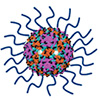
Nanoparticle vaccine could curb cancer metastasis to lungs by targeting a protein
Researchers have developed an experimental vaccine that could prevent the spread of metastatic cancers to the lungs. The key ingredients of the vaccine are nanoparticles - fashioned from bacterial viruses - that have been engineered to target a protein known to play a central role in cancer growth and spread.
October 18, 2023 Read more

Plasma jet tech transforms microalgae into ultrathin bioactive coatings
These coatings not only tackle bacterial infections but also promote faster wound healing and possess potent anti-inflammatory properties. This holds promise especially for the treatment of chronic wounds, which often pose challenges due to prolonged healing times.
October 17, 2023 Read more
Bacteria found in desert pave the way for paint that produces oxygen whilst capturing carbon
Researchers have created an innovative paint that contains oxygen-producing bacteria capable of capturing carbon dioxide.
October 17, 2023 Read more
Researchers develop organic nanozymes suitable for agricultural use
Nanozymes are generally considered too toxic and expensive for use in agriculture and food science. Now, researchers have developed a nanozyme that is organic, non-toxic, environmentally friendly, and cost effective.
October 17, 2023 Read more

Transforming wastewater contaminants into valuable chemicals with sunlight
Scientists propose a novel method to transform wastewater contaminants into valuable chemicals like 2,3-butanediol using sunlight and engineered Vibrio natriegens bacteria, achieving solar-driven production on a 5-liter scale and paving the way for sustainable chemical manufacturing.
October 17, 2023 Read more
Novel hydrogel finds new aptamers, or 'chemical antibodies', in days
A new method uses a hydrogel - a polymer network that holds its shape and can expand when it takes in a large amount of water - to retain 'high-affinity', or well-fitting, aptamers while the rest of the aptamer candidates leave the gel in 60 hours.
October 17, 2023 Read more