

Biotechnology News – Latest Headlines
 Subscribe to our Biotechnology News feed
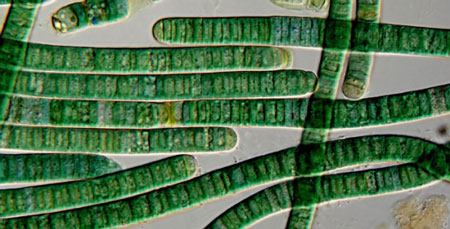
'Snooze button' on biological clocks improves cell adaptability
The circadian clocks that control and influence dozens of basic biological processes have an unexpected "snooze button" that helps cells adapt to changes in their environment.
February 18, 2013 Read more
The quest for a better bionic hand
New research is paving the way for new, smart prosthetics that connect directly to the nervous system. The benefits are more versatile prosthetics with intuitive motor control and realistic sensory feedbac - in essence, they could one day return dexterity and the sensation of touch to an amputee.
February 18, 2013 Read more
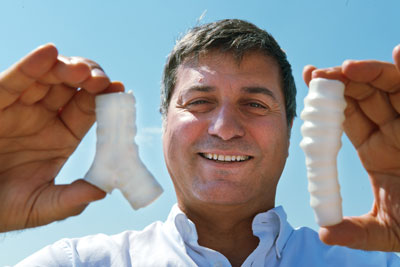
Stem cell-based bioartificial tissues and organs
Pioneering stem cell-based transplant technology is being developed and tested on new organs and tissues.
February 18, 2013 Read more
Molecules generated that can halt metastasis of colon cancer
A Basque research consortium has managed to halt the progress of colon cancer and its metastasis in the liver in an experimental model with mice. This advance, that may open a new path for the future treatment of such pathologies, has been achieved by creating molecules which interfere with the adhesion of tumour cells to other cells of the organism.
February 18, 2013 Read more
Neuroprosthesis gives rats the ability to 'touch' infrared light (w/video)
Researchers have given rats the ability to "touch" infrared light, normally invisible to them, by fitting them with an infrared detector wired to microscopic electrodes implanted in the part of the mammalian brain that processes tactile information. The achievement represents the first time a brain-machine interface has augmented a sense in adult animals.
February 17, 2013 Read more
Mussel-inspired 'glue' for surgical repair and cancer drug delivery
Mimic of key mussel adhesive protein is harnessed for biomedical applications
February 17, 2013 Read more
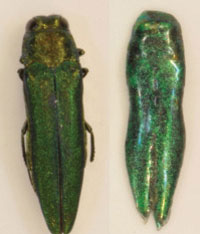
Decoys could blunt spread of ash-killing beetles
After 25 years, researchers may have found a way to keep the emerald ash borer in check.
February 15, 2013 Read more
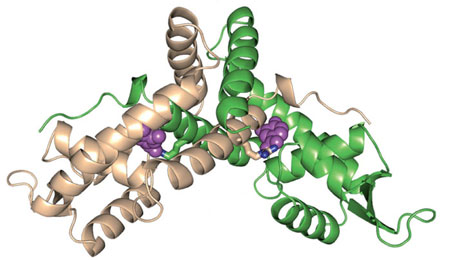
How a microbial biorefinery regulates genes
Digesting lignin, a highly stable polymer that accounts for up to a third of biomass, is a limiting step to producing a variety of biofuels. Researchers at Brown have figured out the microscopic chemical switch that allows Streptomyces bacteria to get to work, breaking lignin down into its constituent parts.
February 14, 2013 Read more
FDA approves first bionic eye (w/video)
Argus II is first approved prosthesis to restore limited vision to those blinded by retinitis pigmentosa.
February 14, 2013 Read more
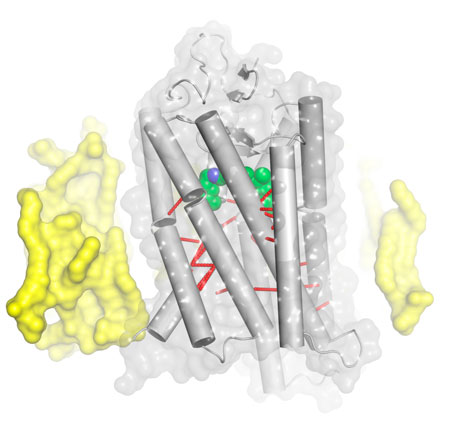
A glimpse inside the control centres of cell communication
Researchers detect characteristic constructional features in a family of sensors that process signals in the human body and control physiological processes.
February 14, 2013 Read more
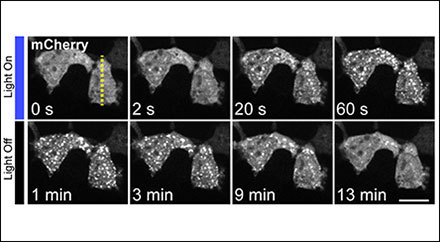
Using light to control cell clustering
A new study from engineers at Rensselaer Polytechnic Institute and the University of California, Berkeley, pairs light and genetics to give researchers a powerful new tool for manipulating cells.
February 12, 2013 Read more
Molecular 'calcium sponge' created to tackle heart failure
Researchers at the University of Minnesota's Department of Integrative Biology and Physiology and the Lillehei Heart Institute have utilized molecular genetic engineering to optimize heart performance in models of diastolic heart failure by creating an optimized protein that can aid in high-speed relaxation similar to fast twitching muscles.
February 11, 2013 Read more
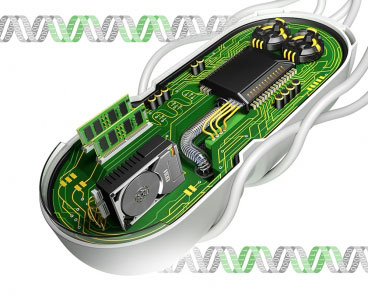
New synthetic biology circuits that combine memory and logic
MIT engineers have created genetic circuits in bacterial cells that not only perform logic functions, but also remember the results, which are encoded in the cell's DNA and passed on for dozens of generations.
February 11, 2013 Read more
Bioengineer to use hybrid imaging system to see deep tissue
Tool would use light, sound to give more accurate picture.
February 8, 2013 Read more
Scientists make groundbreaking discovery of cell nucleus structure crucial to understanding diseases
Genes relocated from their correct position in the nucleus cause them to malfunction and this may lead to the heart, blood vessels and muscles breaking down. This new discovery by A*STAR scientists may be the key to finding new cures in the future.
February 8, 2013 Read more
A privacy risk in your DNA
Prof. Eran Halperin has found that advances in DNA sequencing carry with them an enormous risk - the theft of personal information from genetics databases poses a serious threat to privacy. He urges that new legislation concerning the maintenance of private and public databases, as well as anti-genetic-discrimination laws, should be drafted.
February 7, 2013 Read more
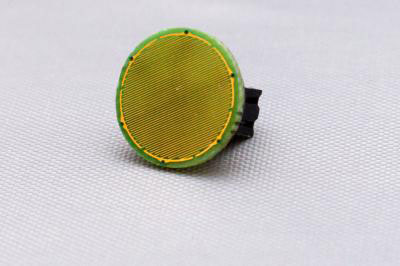
Breakthrough allows the electroporation of cell cultures for less than 1 Euro
Researchers from the Polytechnic University of Catalonia have developed a technique that improves and cuts the cost of a technique called electroporation, which involves opening pores in cell membranes using an electric field to introduce substances like drugs and DNA.
February 7, 2013 Read more
DNA chip to diagnose Attention Deficit Hyperactivity Disorder
Researchers propose a DNA chip with 32 polymorphisms to be used for diagnosing, but also for calculating genetic susceptibility to different variables, including how well the patient is responding well to drugs or normalisation of symptoms.
February 7, 2013 Read more