Defect-laden vertical graphene MOF assembly enables simple, sustainable production of chemicals
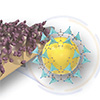 Researchers develop a scalable process for stable graphene-metal hybrids, enhancing sustainable chemical production with improved fabrication.

 Subscribe to our Nanotechnology Spotlight feed
Researchers develop a scalable process for stable graphene-metal hybrids, enhancing sustainable chemical production with improved fabrication.
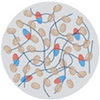 Inspired by morphogenesis, researchers create a reconfigurable living material from magnetic microparticles, yeast cells, and hydrogels. Additive biomanufacturing takes a leap forward.
 Novel spiking neural network architecture processes images using event-driven photodetector circuits inspired by biological vision. Direct optical-to-spike conversion slashes power needs for visual pattern recognition tasks.
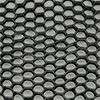 Researchers pioneer smart honeycombs by stacking and morphing laser-induced graphene layers, enabling innovative aerospace materials with integrated responsiveness to flight stresses like excessive heat, turbulence or ice buildup.
 Scientists detail technique to camouflage immunostimulatory nucleic acid nanofibers via dna aptamer functionalization, thereby dramatically expanding possibilities for employing structures as vaccine adjuvants or immunotherapy vectors.
 Machine learning methods and data science can uncover hidden patterns in nanoparticle synthesis conditions and property outcomes.
 New scientific review explores five high-potential applications of nanotechnology for combating contamination, spoilage and fraud issues facing the global food supply.
 Researchers developed an innovative biomimetic technique enabling swift electrostatic assembly of functional nanoparticle monolayers across entire silicon wafers within seconds, over 100-1000 times faster than previous methods.