Showing Spotlights 25 - 32 of 2785 in category All (newest first):
 Researchers develop advanced model incorporating realistic absorption spectra to identify optimal bandgap combinations for efficient and transparent organic solar cells.
Mar 28th, 2024
 Researchers have developed innovative mechanical transistors that combine temperature-responsive materials and switchable structures, enabling complex logic operations and memory storage without electricity, opening up new possibilities for computing and environmental interaction.
Mar 26th, 2024
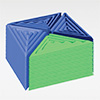 Researchers have developed a method to 3D print complex architectures made of perovskite quantum dot-polymer composites, which could enable sophisticated optoelectronic devices.
Mar 25th, 2024
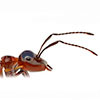 Neuromorphic antennal sensory system emulates ant antennae, outperforming humans in tactile exploration and magnetic perception tasks.
Mar 22nd, 2024
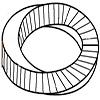 By harnessing the unique properties of Moebius rings, scientists have discovered a way to precisely control light in complex curved spaces, paving the way for innovative optical technologies.
Mar 21st, 2024
 Researchers develop an intelligent iontronic wood device that seamlessly integrates tactile sensing into woodwork, enabling novel human-wood interactions.
Mar 20th, 2024
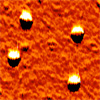 CNM-Au8 gold nanocatalysts exhibit a unique protein corona composition that enables them to cross the blood-brain barrier, paving the way for new treatments for neurodegenerative diseases.
Mar 19th, 2024
Researchers demonstrate highly deformable micro-supercapacitors using laser-patterned liquid metal electrodes, addressing key challenges in flexible energy storage.
Mar 18th, 2024

 Subscribe to our Nanotechnology Spotlight feed