4D Printed robot dances and crawls via temperature shifts (w/video)
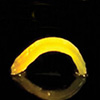 Researchers have created a 4D printed soft robot that can crawl and dance using only changes in temperature, offering potential advancements in sustainable, autonomous robotics.

 Subscribe to our Nanotechnology Spotlight feed
Researchers have created a 4D printed soft robot that can crawl and dance using only changes in temperature, offering potential advancements in sustainable, autonomous robotics.
 Inkjet printing emerges as a transformative technology for personalized medicine and drug delivery, offering a highly precise and flexible approach to drug formulation and delivery.
 This advanced wearable biosensor leverages innovative printing technology to enable continuous, non-invasive monitoring of glucose, alcohol, pH, and temperature through sweat.
 Breakthrough in soft robotics: MXene-cellulose nanofiber actuators mimic plant movements, integrating sensing and actuation in one material.
 Researchers create a 3D flexible plasmonic web that enables ultrasensitive surface-enhanced Raman spectroscopy, detecting molecules remotely at the yoctomolar level.
 Plasma polymer nanoparticles offer a novel solution for bioactivating inert materials, overcoming limitations of conventional plasma treatments and enabling diverse biomedical applications.
 Researchers explore innovative approaches for developing life-inspired materials with advanced properties such as adaptivity, self-organization, and embodied intelligence.
 A novel tunable microcavity deterministically coupled to single quantum dots achieves highly efficient, pure and indistinguishable single photon generation, overcoming key roadblocks to scalable quantum technologies.