New image reveals secrets of planet birth
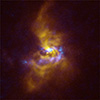 A spectacular new image released today by the European Southern Observatory gives us clues about how planets as massive as Jupiter could form.
Jul 25th, 2023
Read more
 Subscribe to our Space Exploration News feed
A spectacular new image released today by the European Southern Observatory gives us clues about how planets as massive as Jupiter could form.
Jul 25th, 2023
Read more Scientists have found key evidence for the existence of nanohertz gravitational waves, marking a new era in nanohertz gravitational wave research.
Jul 24th, 2023
Read more New measurements by the James Webb Space Telescope have detected water vapor at distances of less than 100 million miles from the star - the region where rocky, terrestrial planets may be forming.
Jul 24th, 2023
Read more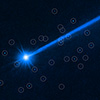 Astronomers using Hubble's extraordinary sensitivity have discovered a swarm of boulders that were possibly shaken off the asteroid when NASA deliberately slammed the half-ton DART impactor spacecraft into Dimorphos at approximately 14,000 miles per hour.
Jul 21st, 2023
Read more Scientists have successfully established a connection between the rotation rates of stars in star clusters and those outside them, so-called field stars, enabling the ages of the latter to be derived.
Jul 20th, 2023
Read more Unusual white dwarf star is made of hydrogen on one side and helium on the other.
Jul 19th, 2023
Read more The discovery of a new type of stellar object challenges our understanding of the physics of neutron stars.
Jul 19th, 2023
Read more Cooler than a campfire and smaller than Jupiter, this brown dwarf star is a rare find.
Jul 13th, 2023
Read more Scientists have found a source for the mysterious alignment of stars near the Galactic Centre.
Jul 13th, 2023
Read more Perseverance rover discovers diverse organic matter in Mars's Jezero Crater.
Jul 12th, 2023
Read more By investigating the 'birth environment' of planets - areas of gas and dust that swirl around a central star - known as the protoplanetary disc, astronomers have made a new discovery on how small planets might form.
Jul 5th, 2023
Read more The echoes of light from jets launched from black holes offers a new way to pin down the distance to these exotic objects and to study a largely unobserved population in the centre of the Galaxy. It could also even help determine the rate of expansion of the Universe.
Jul 5th, 2023
Read more A major scientific goal of future detectors is to deliver a comprehensive catalog of gravitational wave events, and this will be a completely novel use of the remarkable dataset.
Jul 3rd, 2023
Read more Quasars are the supermassive black holes at the centres of early galaxies. Scientists have unlocked their secrets to use them as 'clocks' to measure time near the beginning of the universe. With this tick-tock of the quasar clock, we can now chart time across the life of the cosmos.
Jul 3rd, 2023
Read more For the first time, astrophysicists have found compelling evidence for the existence of gravitational waves which oscillate with periods ranging from years to decades.
Jun 29th, 2023
Read more For the first time, the James Webb Space Telescope has revealed starlight from two massive galaxies hosting actively growing black holes - quasars - seen less than a billion years after the Big Bang.
Jun 28th, 2023
Read more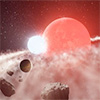 Scientists have encountered a planet that appears to have survived its host star expanding outwards to become a red giant. However, the single star, Baekdu, might once have been a binary star system, helping the lucky planet survive.
Jun 28th, 2023
Read more This molecule, never before seen in space, is believed to be a cornerstone of interstellar organic chemistry.
Jun 26th, 2023
Read more